In This Article
ToggleWhat an ice dam actually is
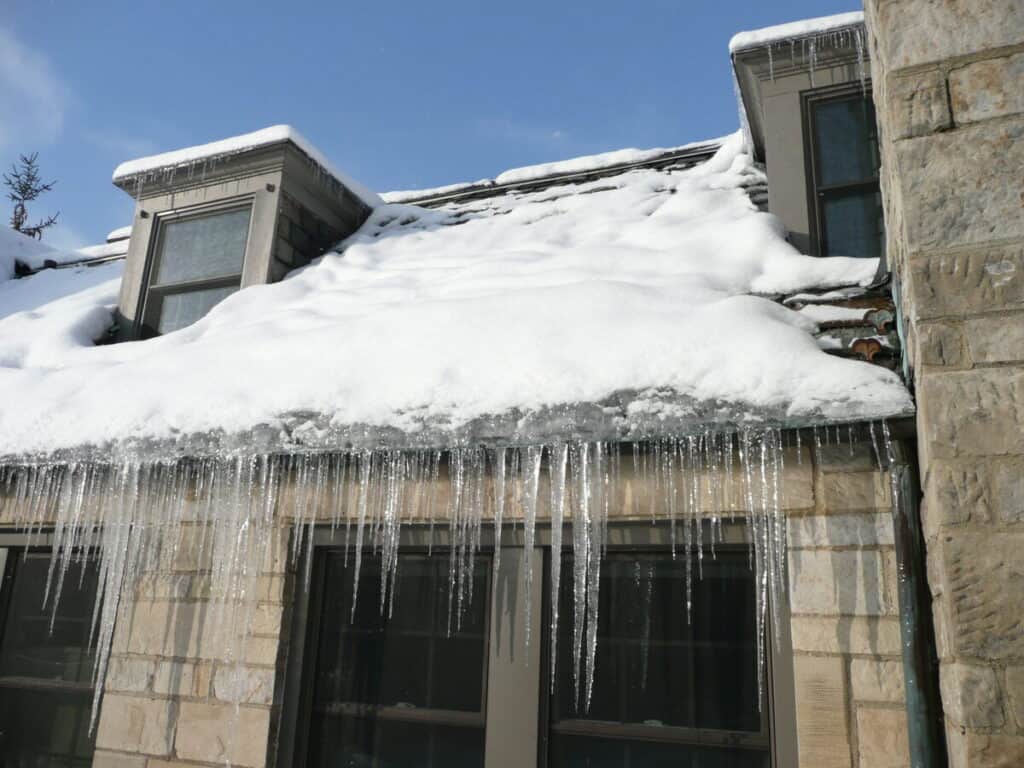
An ice dam forms when heat escaping from your house warms the roof deck and melts the snow sitting on it. That meltwater runs down to the eaves, which hang out past the heated part of the house and stay below freezing. The water refreezes there, building a ridge of ice. Once the ridge is established, meltwater backs up behind it, sits on the roof, and works its way under the shingles. Shingles shed running water. They were never designed to hold back a standing pool, which is what a dam creates.Why Twin Cities homes get hit so hard
Our winters are the obvious factor: months of snow cover with temperatures that hover near freezing during sunny stretches, then plunge. But the bigger factor is our housing stock. A huge share of Twin Cities homes are ramblers, Cape Cods, and story-and-a-half houses built decades before modern insulation standards. Those knee-wall attics and shallow roof cavities are notoriously hard to insulate and ventilate, and they’re exactly where we see the worst dams year after year.The fixes that actually work
1. Air sealing. This is the big one. Warm air reaches your attic through gaps around recessed lights, bath fan housings, plumbing stacks, chimney chases, and attic hatches. Sealing those leaks does more to stop ice dams than anything else, and as a bonus it cuts your heating bill. 2. Insulation. Current recommendations for our climate zone call for attic insulation at R-49 and up. Many older Twin Cities homes have a third of that or less. Once air leaks are sealed, bringing the attic floor up to spec keeps heat in the house where it belongs. 3. Balanced ventilation. Cool air in through the soffits, warm moist air out through a ridge vent or roof vents. Good ventilation keeps the roof deck cold and flushes out any moisture that does make it into the attic. Blocked soffit vents are one of the first things we check. 4. Ice-and-water protection at re-roof time. Minnesota code requires a self-sealing ice barrier membrane at the eaves on new roofs, and we run it in valleys and around penetrations too. It won’t prevent a dam, but it keeps backed-up water from reaching the deck. If your roof is due for replacement and was installed before that standard was common, an upgrade is worth talking about.What doesn’t work, or backfires
- Chipping the ice. Hammers, hatchets, and ice picks on a frozen roof damage shingles and void warranties. We’ve repaired more than one roof that was “fixed” this way.
- Salt-filled pantyhose and pucks. Marginal results at best, and the runoff stains siding and kills landscaping.
- Heat cables as a permanent fix. They treat the symptom, add to your electric bill, and still need correct installation to work at all. On a chronic trouble spot they can be a reasonable band-aid while you plan the real fix, but they’re not a cure.
The one stopgap worth doing
A roof rake. After heavy snowfalls, pulling the first three to four feet of snow off the eaves, from the ground, removes most of the meltwater supply. It won’t fix the underlying heat loss, but it meaningfully lowers your risk for the season while you line up the permanent repairs. Work from the ground, stay clear of power lines, and never climb a snowy or icy roof.If water is coming in right now
Call a professional. Steaming a channel through an active dam is a job for the right equipment, and it’s far cheaper than the ceiling, insulation, and drywall damage that builds every day the dam sits there. Then, once the emergency is handled, plan the attic work so you’re not in the same spot next January.Fall is the window
September and October are when this work should happen, before the first sustained freeze. Insulation and roofing schedules fill fast once the forecasts turn. If you fought ice dams last winter, that’s your house telling you something, and it’s a lot easier to listen now than in February. What a fall inspection should cover depends a little on the house and the neighborhood. We wrote city-specific guides for Maple Grove roof inspections before the first snow, Golden Valley roof inspections before snow, and a Plymouth first-snow roof checklist.Ice dam prevention FAQ
Heat escaping from the house warms the roof deck and melts the snow sitting on it. The meltwater runs down to the eaves, which stay below freezing, and refreezes into a ridge of ice. Once the ridge is established, meltwater backs up behind it and works its way under the shingles.
The winters play a part: months of snow cover with temperatures that hover near freezing, then plunge. But the bigger factor is the housing stock. Many local ramblers, Cape Cods, and story-and-a-half homes were built decades before modern insulation standards, and their knee-wall attics and shallow roof cavities are hard to insulate and ventilate.
Air sealing. Warm air reaches the attic through gaps around recessed lights, bath fan housings, plumbing stacks, chimney chases, and attic hatches, and sealing those leaks does more to stop ice dams than anything else. Once air leaks are sealed, bring attic insulation up to R-49 or better and make sure ventilation is balanced: cool air in through the soffits, warm moist air out through a ridge vent or roof vents.
No. They treat the symptom, add to your electric bill, and still need correct installation to work at all. On a chronic trouble spot they can be a reasonable band-aid while you plan the real fix, but they are not a cure.
No. Hammers, hatchets, and ice picks on a frozen roof damage shingles and void warranties. The safe stopgap is a roof rake used from the ground: after heavy snowfalls, pull the first three to four feet of snow off the eaves, stay clear of power lines, and never climb a snowy or icy roof.
Call a professional. Steaming a channel through an active dam is a job for the right equipment, and it is far cheaper than the ceiling, insulation, and drywall damage that builds every day the dam sits there. Once the emergency is handled, plan the attic work so you are not in the same spot next January.