Golden Valley Roof Inspections Before Snow (2026): Catch Winter Problems Early
Golden Valley’s mature neighborhoods have character, shade, and established trees. They also create roof conditions that deserve attention before winter: leaves gather behind chimneys, small branches collect in valleys, and shaded eaves can stay cold longer after a storm. A roof inspection before the first lasting snow helps find those trouble spots while they are still visible and accessible.
The goal is simple: understand the roof’s condition before freeze-thaw cycles and snow cover hide defects. A useful inspection should produce clear findings, photos, and a short list of priorities rather than a sales pitch.
Why timing matters in Golden Valley
Once snow stays on the roof, an inspector may not be able to see cracked shingles, worn flashing, open fasteners, or debris trapped in a valley. Repairs also become more weather-dependent. Scheduling after leaf drop and before persistent snow creates the best window for a careful exterior and attic review.
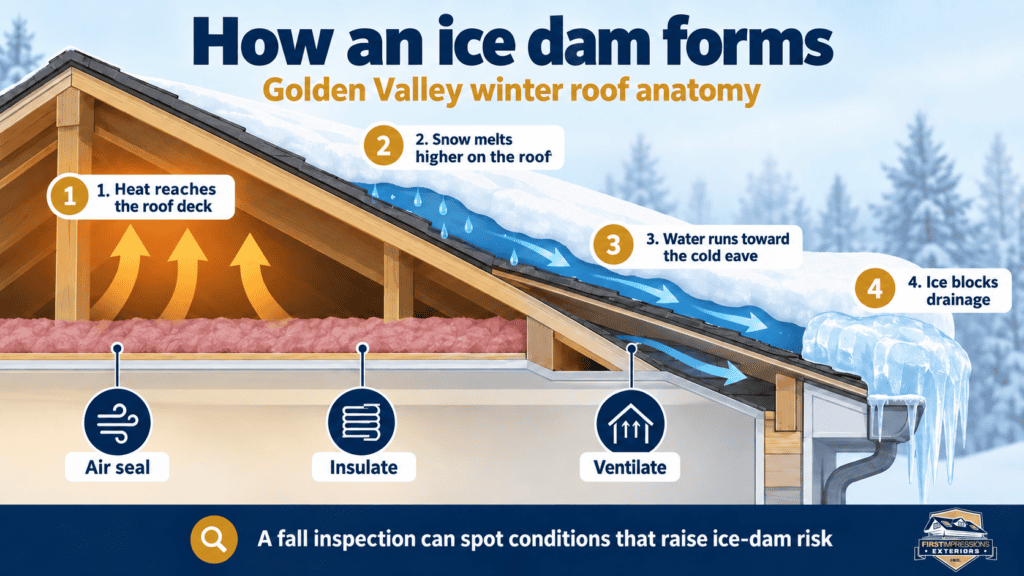
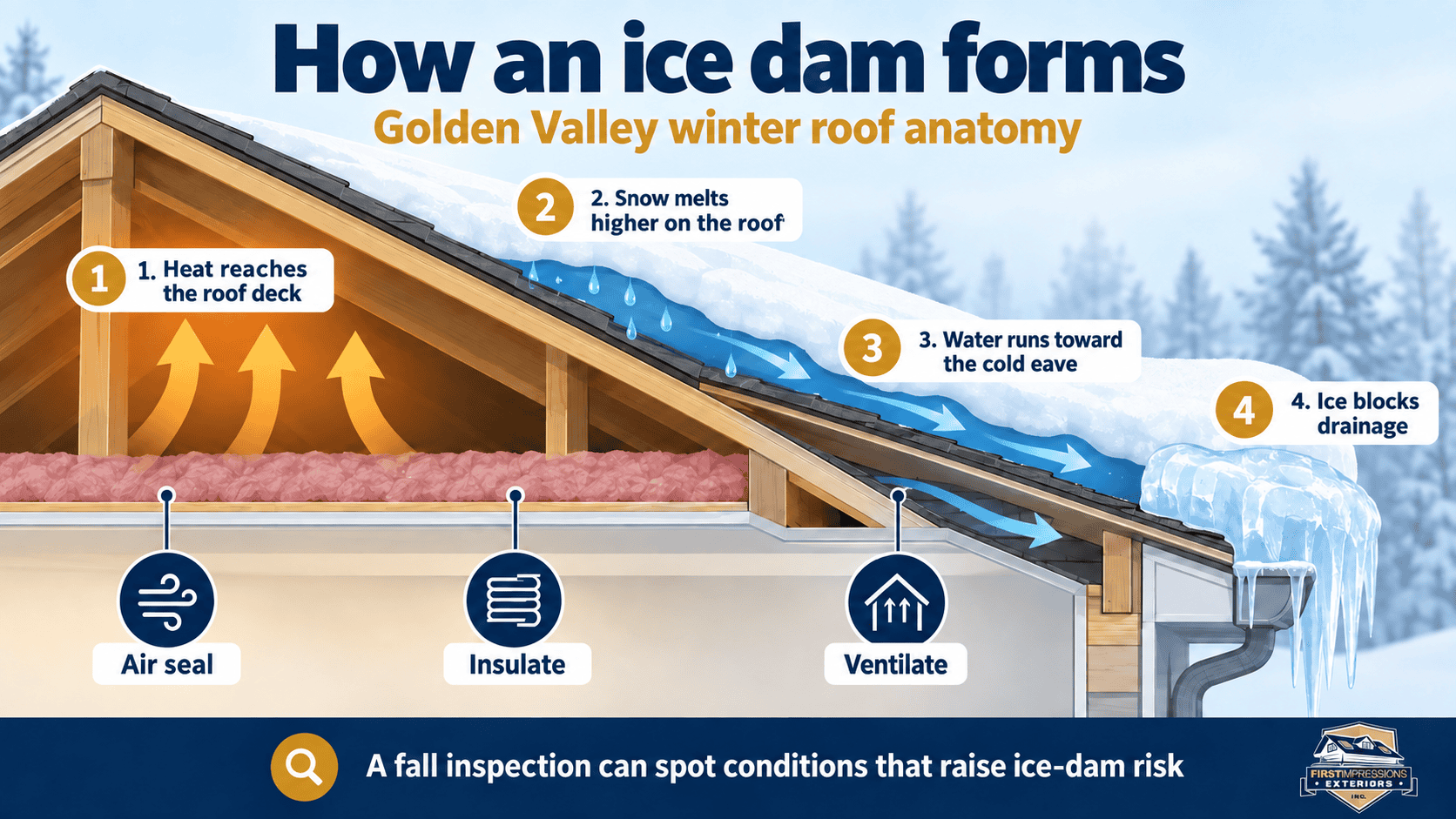
Golden Valley also experiences the same abrupt temperature swings common across the Twin Cities. Snow can melt on warmer roof areas, run toward colder eaves, and refreeze. A fall inspection cannot prevent every winter issue, but it can reveal the drainage and heat-loss conditions that make problems more likely.
Five places inspectors should study closely
1. Valleys and debris pockets
Valleys carry a large share of roof runoff. Leaves, twigs, and granules can slow that flow and hold moisture against the shingles. An inspector should check for damage, poor drainage, and signs that water has been moving sideways under the roofing.
2. Chimneys, sidewalls, and step flashing
Many Golden Valley homes have roof-to-wall connections, masonry chimneys, or additions with several transitions. These areas depend on layered flashing, not a bead of caulk. Rust, gaps, loose counterflashing, and repeated patching are reasons for a closer look.
3. Eaves, soffits, and fascia
Peeling paint, dark staining, soft wood, or gutters pulling away from the fascia can indicate past overflow or drainage trouble. The eaves are also where ice-dam symptoms often appear. FIE’s Minnesota ice-dam guide explains why attic heat loss, insulation, and ventilation matter more than simply removing ice.
4. Penetrations and low-slope sections
Plumbing vents, exhaust terminations, skylights, and satellite mounts all interrupt the roof surface. Low-slope porch or addition roofs may drain more slowly than the main roof. Each penetration and transition should be checked for cracks, loose seals, and previous repairs.
5. The attic underside
Inside the attic, an inspector can look for darkened sheathing, rusty nail tips, frost patterns, compressed insulation, blocked soffit vents, and signs of active leakage. These clues help distinguish an exterior defect from condensation or indoor air escaping into the attic.
Tree-related maintenance without risky roof work
Overhanging branches can rub shingles, drop debris, and break during heavy snow or wind. Have unsafe limbs assessed by a qualified tree professional, especially when they hang over the house or service lines. Keep leaves out of gutters when it can be done safely from the ground, but do not walk on a frosty roof or lean a ladder on unstable gutters.
If snow or ice becomes a concern later, use a roof rake only from the ground and follow the manufacturer’s instructions. Never chip ice with an axe, hammer, or sharp tool. That can damage shingles and create a leak where none existed.
Repair now, monitor, or plan replacement?
A good inspection should sort findings into three groups:
- Repair before winter: open flashing, active leaks, missing shingles, damaged vents, or drainage failures.
- Monitor: normal aging, limited granule loss, or sealed repairs that remain serviceable.
- Plan ahead: broad deterioration, recurring leaks, failing decking, or a roof nearing the end of its useful life.
This approach keeps a small problem from being confused with a full replacement. If replacement is the right answer, the estimate should explain the roof system, ventilation, ice protection, materials, and permitting rather than quoting shingles alone.
Make the inspection useful
Ask for photos and a written summary. Confirm which areas were inspected, what could not be accessed, and whether a follow-up is recommended after the first major melt. Keep the report with your home records so future storm or maintenance inspections have a baseline.
First Impressions Exteriors provides roofing services in Golden Valley, including inspections, repairs, and replacement planning. Schedule an inspection before snow covers the details that matter.
Quick answer: Is a fall roof inspection worth it in Golden Valley?
Yes, especially before persistent snow. Fall visibility makes it easier to find tree debris, flashing gaps, drainage trouble, shingle damage, and attic moisture before freeze-thaw cycles make access and repairs harder.
Golden Valley roof inspection FAQ
Schedule after most leaves have dropped but before snow remains on the roof. Also inspect after hail, high wind, falling branches, or a newly discovered leak.
You can spot missing shingles, sagging gutters, debris, and obvious damage with binoculars. A ground check cannot replace close flashing, attic, ventilation, and roof-deck evaluation.
Yes when they can be removed safely. Clearing gutters and visible debris helps reveal drainage problems, but avoid walking on a damp or frosty roof.
Warm air escaping into the attic can melt snow unevenly. Meltwater then refreezes near colder eaves. Air sealing, insulation, ventilation, and drainage all matter.
It should document condition and repair priorities. Replacement is justified by broad deterioration, recurring leaks, failing decking, or other evidence, not roof age alone.