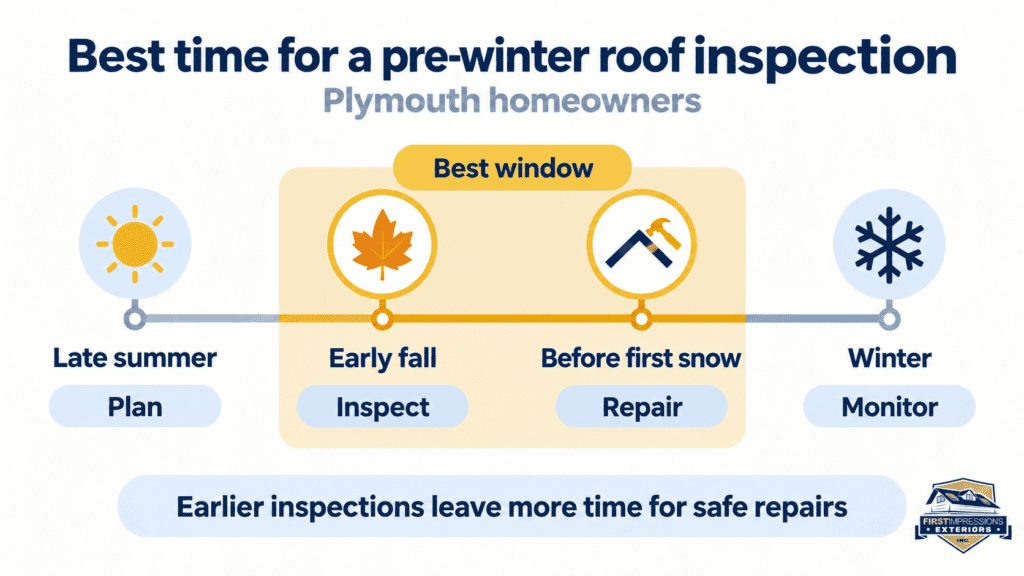
Plymouth Roof Inspections Before Winter (2026): A First-Snow Checklist
Plymouth homes range from straightforward gable roofs to larger designs with multiple valleys, dormers, additions, and long gutter runs. The more transitions a roof has, the more places water must be directed correctly. A professional inspection before the first lasting snow gives homeowners a chance to check those details before winter hides them.
Fall is also the right time to establish a baseline. If a ceiling mark appears during a thaw or ice forms along one roof edge, you will have recent photos and findings to help identify what changed.
What winter asks of a roof system
A roof has to shed rain, melting snow, and wind-driven moisture while the attic stays close to outdoor temperature. When warm indoor air escapes into the attic, it can heat the roof deck unevenly. Snow melts over the warmer area and refreezes near a colder eave. The University of Minnesota Extension identifies air leakage and inadequate insulation as central ice-dam causes.
That is why an inspection should cover the full roof system: shingles, flashing, drainage, attic ventilation, and insulation conditions. Looking only at the surface can miss half the story.
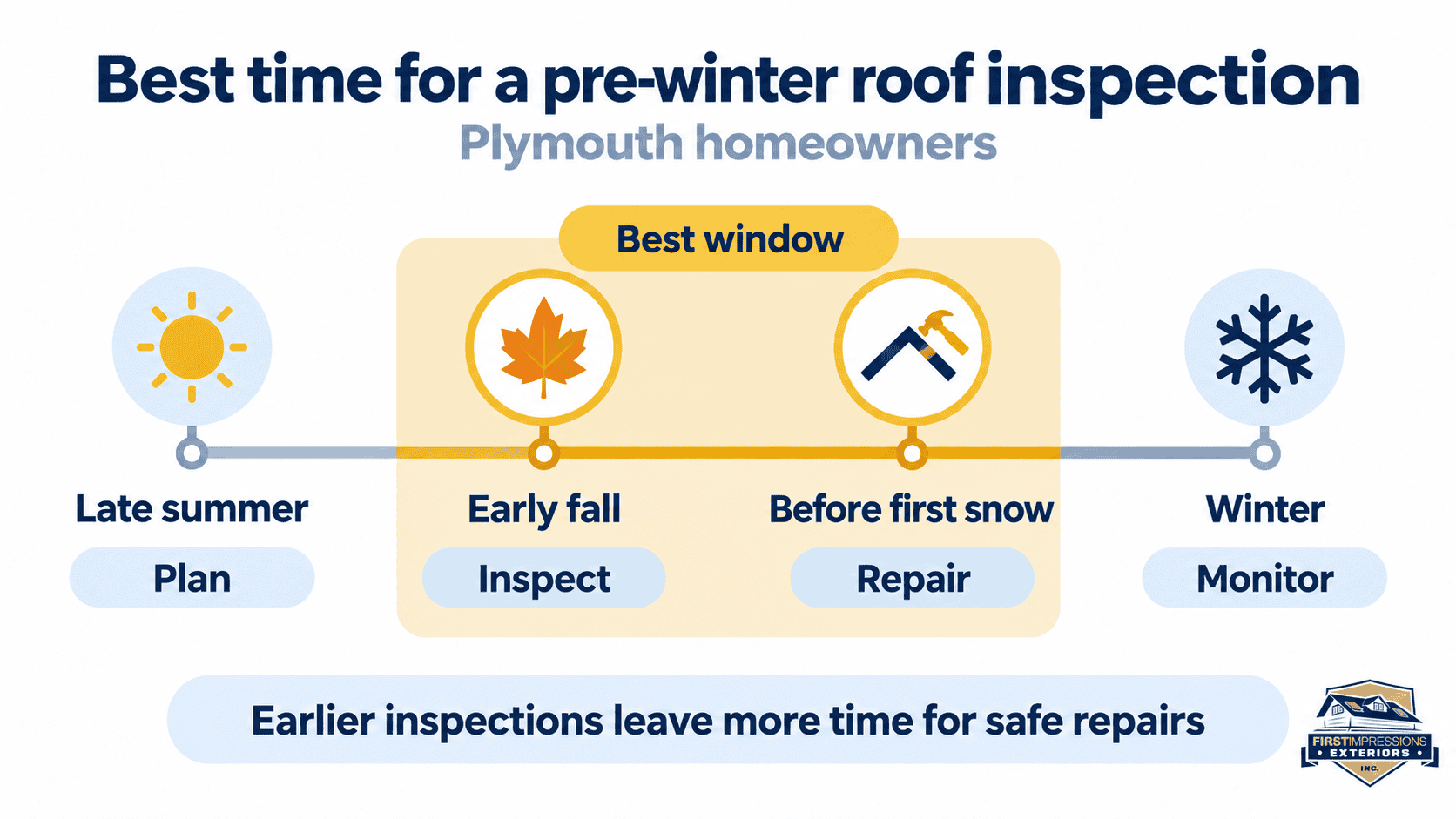
Plymouth’s pre-snow roof checklist
Review every roof plane
An inspector should look for shingles that are missing, lifted, cracked, creased, or losing granules unevenly. Ridge caps and hip caps take direct wind exposure and should be checked separately. On complex roofs, each plane may age differently depending on sun, shade, and prevailing weather.
Trace valleys and water paths
Valleys, crickets, gutters, and downspouts are designed to move water through the system. Debris, a sagging gutter, or a poorly directed downspout can redirect water toward fascia, siding, or the foundation. Long roof runs deserve special attention because they deliver more water to the lower edge during a fast thaw.
Inspect flashing, vents, and penetrations
Check chimney flashing, step flashing at sidewalls, plumbing-vent boots, skylights, bath-fan outlets, and roof-mounted equipment. Cracked rubber boots and exposed fasteners are small defects that can create outsized leaks.
Check the attic for moisture and airflow
Look for damp or stained sheathing, frost evidence, blocked soffit vents, disconnected exhaust ducts, and insulation gaps. Bathroom and kitchen fans should vent outdoors, not into the attic. FIE’s Ice Dams 101 guide covers the connection between attic heat loss and winter roof damage in more detail.
Document older repairs
Past sealant patches, replaced shingles, or repaired flashing should be checked for movement and weathering. A repair that is still sound can be left alone. One that has cracked or separated should be corrected before snow and ice make access harder.
When to call sooner
Do not wait for a scheduled fall inspection if you notice:
- A fresh ceiling stain or damp attic insulation
- Shingles or metal pieces on the ground
- A gutter that has pulled away or overflows in one spot
- Daylight through the roof deck
- A soft, sagging, or visibly uneven roof area
- Repeated ice buildup limited to one eave or valley
Active leakage, structural movement, or widespread wind damage should be assessed promptly. Stay off the roof and keep people away from areas where snow, ice, or loose material could fall.
Questions to ask after the inspection
- Which repairs should be completed before winter?
- Were any sections inaccessible or obscured?
- Is the attic ventilation path open from soffit to exhaust?
- Are the gutters and downspouts sized and secured for the roof area they serve?
- What should be rechecked after the first major melt?
- If replacement is recommended, what evidence supports that conclusion?
Clear answers help separate maintenance from sales pressure. The report should explain why a condition matters and show it in photos whenever possible.
Use fall to plan, not panic
If the roof is serviceable, a fall inspection may lead only to a few repairs and routine drainage work. If it is nearing replacement, you gain time to compare shingles, ventilation details, warranty terms, and contractor qualifications. Either result is better than discovering a hidden defect during a January thaw.
First Impressions Exteriors provides roofing services in Plymouth and across the Twin Cities. Request a roof inspection or estimate before the first lasting snow limits what can be seen.
Quick answer: What should Plymouth homeowners check before winter?
Inspect the full roof system before snow stays. That means shingles, ridge caps, flashing, valleys, gutters, downspouts, attic moisture, insulation gaps, and ventilation paths. Complex rooflines need particular attention where planes and walls meet.
Plymouth roof inspection FAQ
Fall is ideal after leaf drop and before lasting snow. Schedule sooner after hail, strong wind, a falling branch, a ceiling stain, or visible shingle loss.
An annual inspection is a reasonable baseline for older or complex roofs. Newer roofs may need less frequent professional review, but every roof should be checked after severe weather.
It should cover roofing materials, flashing, penetrations, valleys, drainage, attic moisture, ventilation, and visible decking concerns, followed by photos and repair priorities.
Some emergency repairs are possible when conditions allow, but cold, snow, ice, and material limits can narrow the options. Fall detection creates more flexibility.
Insurance generally depends on the cause of damage and policy terms. Maintenance and age-related wear are different from covered storm damage. Document findings and ask your insurer about your policy.