Opening the mail and finding a letter from your insurance company about your cedar shake roof is a bad way to start the week. It might ask for an inspection. It might list repairs. It might say the roof has to be replaced before your policy renews. Before you do anything, take a breath. A letter is not a verdict, and you have more choices than most homeowners realize.
Here is how to read the letter, what an inspection should cover, and what each replacement option costs in the Twin Cities in 2026.
Why insurers pay extra attention to cedar shake roofs
Cedar is a natural wood product, and it changes as it ages. Minnesota sun, snow, ice and freeze-thaw cycles all leave a mark. Over time, individual shakes can split, curl, loosen, grow moss or algae, and stop shedding water the way they should. Hail and falling tree limbs add to the wear, especially in the leafy suburbs where cedar roofs are common.
Cedar is also more expensive to repair or replace than asphalt, so insurers tend to look closely as these roofs get older. Some ask for an inspection before they renew a policy. Some ask for specific repairs. Some require replacement. Every insurance company has its own rules, so the letter your neighbor got may not match yours.
Step one: don’t assume you need a new roof
Roofs can’t be judged from the driveway. Sometimes a handful of damaged shakes or built-up debris is the whole problem. Other times the roof really has reached the end of its life. The only way to know is to have it inspected by someone who works with cedar.
A good inspection looks at:
- The overall condition of the shakes, including splitting, curling and cupping
- Rot, decay and soft spots
- Missing, loose or damaged shakes
- Moss, algae and debris buildup
- Flashing around chimneys, vents and valleys
- Signs of leaks or moisture in the attic or decking
The goal is to learn whether the problems are isolated or widespread. A few bad shakes is a small repair. Widespread deterioration is a different conversation. Our work is new roof installation, so if your roof only needs minor repairs, we will tell you that plainly.
Step two: read the letter and call your agent
Before you hire anyone, find out exactly what your insurer is asking for. Call your agent and ask:
- What is the deadline, and what happens if it passes?
- Is the request an inspection, a list of repairs, or a full replacement?
- Will an inspection report or a completed repair satisfy the requirement?
- Does the roofing material I choose affect my coverage or my premium?
Keep a copy of the letter and every answer. If storm damage is part of the picture, that is a separate path. Hail, wind and other sudden events are what homeowners insurance is built for. Normal aging and deferred maintenance generally are not. Our guides on roof insurance claims in Minnesota and RCV, ACV and roof payment schedules explain how settlements work.
If replacement makes sense, you have three good options
New cedar shake
Many homeowners love the look and want to keep it. Cedar shakes come in different thicknesses. A 1/2 inch hand-split shake is a common choice. A 3/4 inch heavy shake costs more up front and gives a thicker, more rugged roof. Real cedar needs periodic cleaning and treatment to reach its full life, and that upkeep is the trade for the look.
Brava composite cedar shake
Brava is a composite shake made to look like hand-split cedar. It does not rot, split or feed insects, and it needs far less upkeep than wood. First Impressions Exteriors is a Brava certified contractor. For homeowners who want the cedar look without the maintenance, it is worth a close look. See our roofing brands page for more.
Architectural asphalt shingles
The most affordable route. Modern architectural shingles are a very different product from the flat shingles of 20 years ago, and some impact-resistant lines can qualify for an insurance discount. We cover that in our Class 4 shingle guide.
Cedar shake vs. Brava vs. asphalt: what each costs in 2026
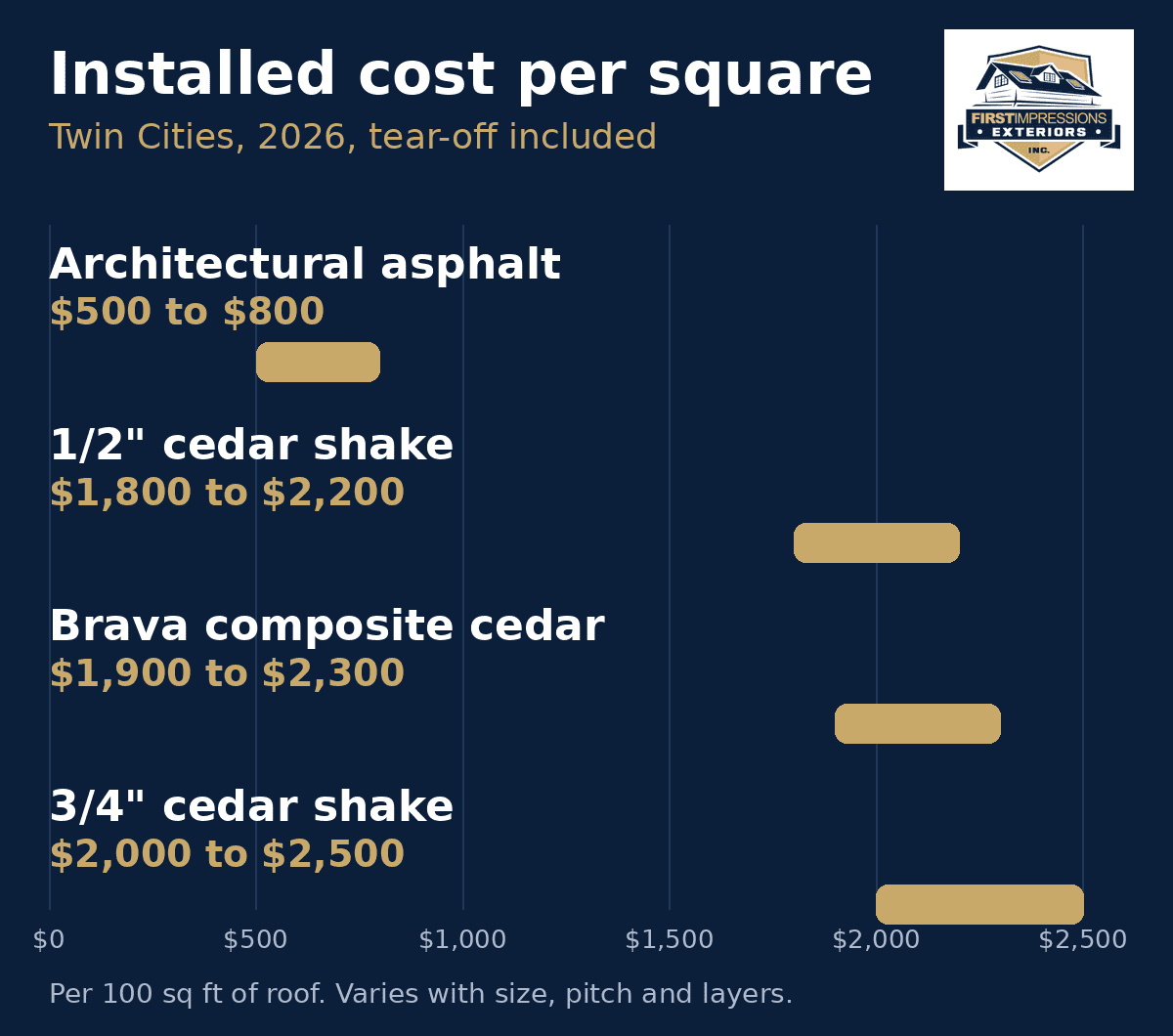
Roofers price in squares, and one square is 100 square feet of roof. A typical Twin Cities home has a roof in the neighborhood of 25 squares, about 2,500 square feet of roof surface. These are typical installed ranges in the metro, tear-off included:
| Roofing material | Per square | Typical 25-square roof |
|---|---|---|
| Architectural asphalt | $500 to $800 | $12,500 to $20,000 |
| 1/2″ cedar shake | $1,800 to $2,200 | $45,000 to $55,000 |
| Brava composite cedar shake | $1,900 to $2,300 | $47,500 to $57,500 |
| 3/4″ cedar shake | $2,000 to $2,500 | $50,000 to $62,500 |
These are planning ranges, not a quote. The final price depends on roof size, pitch, how many layers come off, flashing and ventilation, and any decking that needs repair. Steep, cut-up roofs with lots of valleys cost more than a simple gable.
The sticker price is only part of the picture. Cedar’s cleaning and treatment add cost over the life of the roof, and an older cedar roof can bring more questions at renewal. Before you choose, ask your agent how each material is treated on your policy. We can’t speak for any insurer, but the answer can change which option makes the most sense for your home.
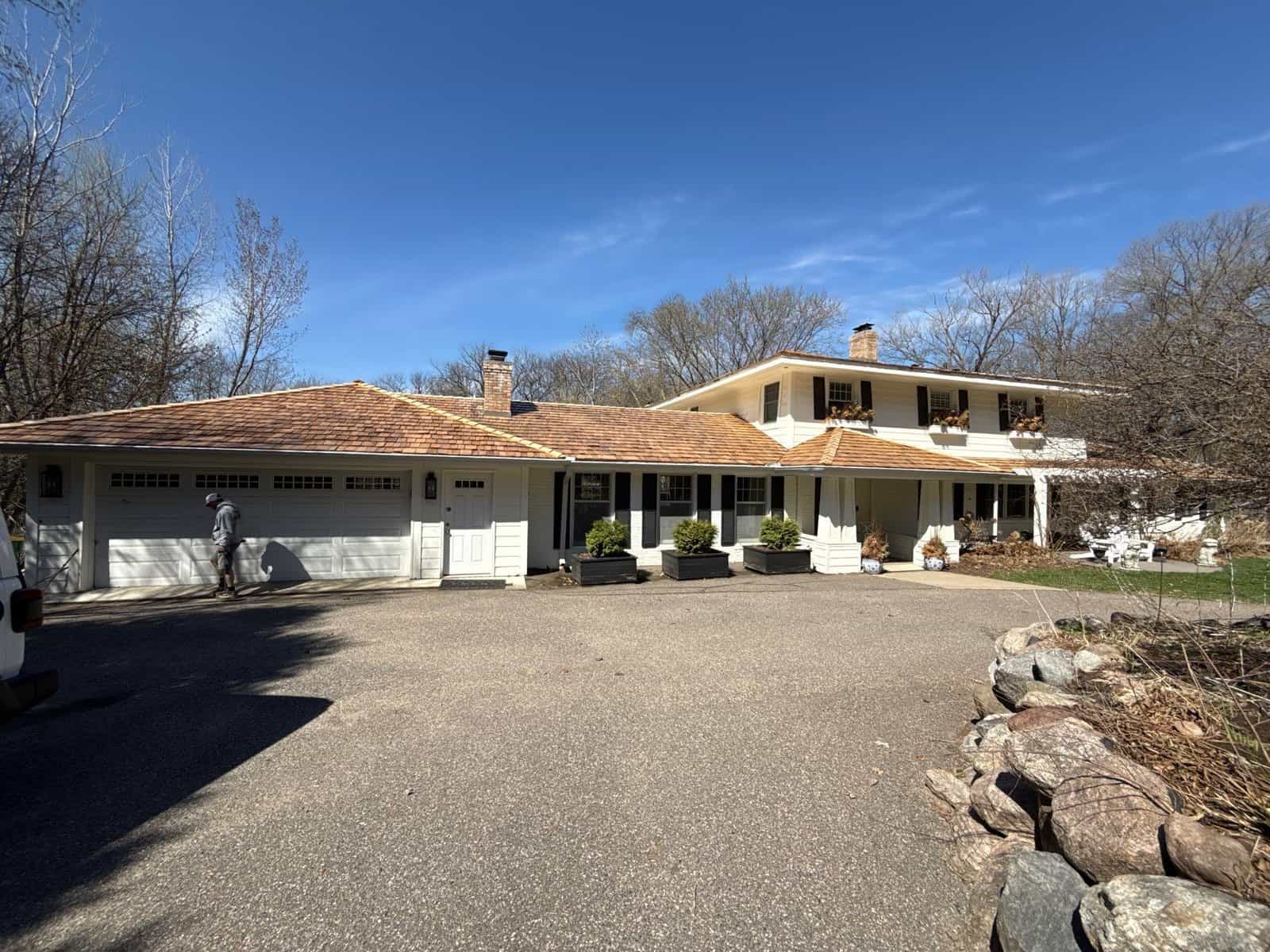
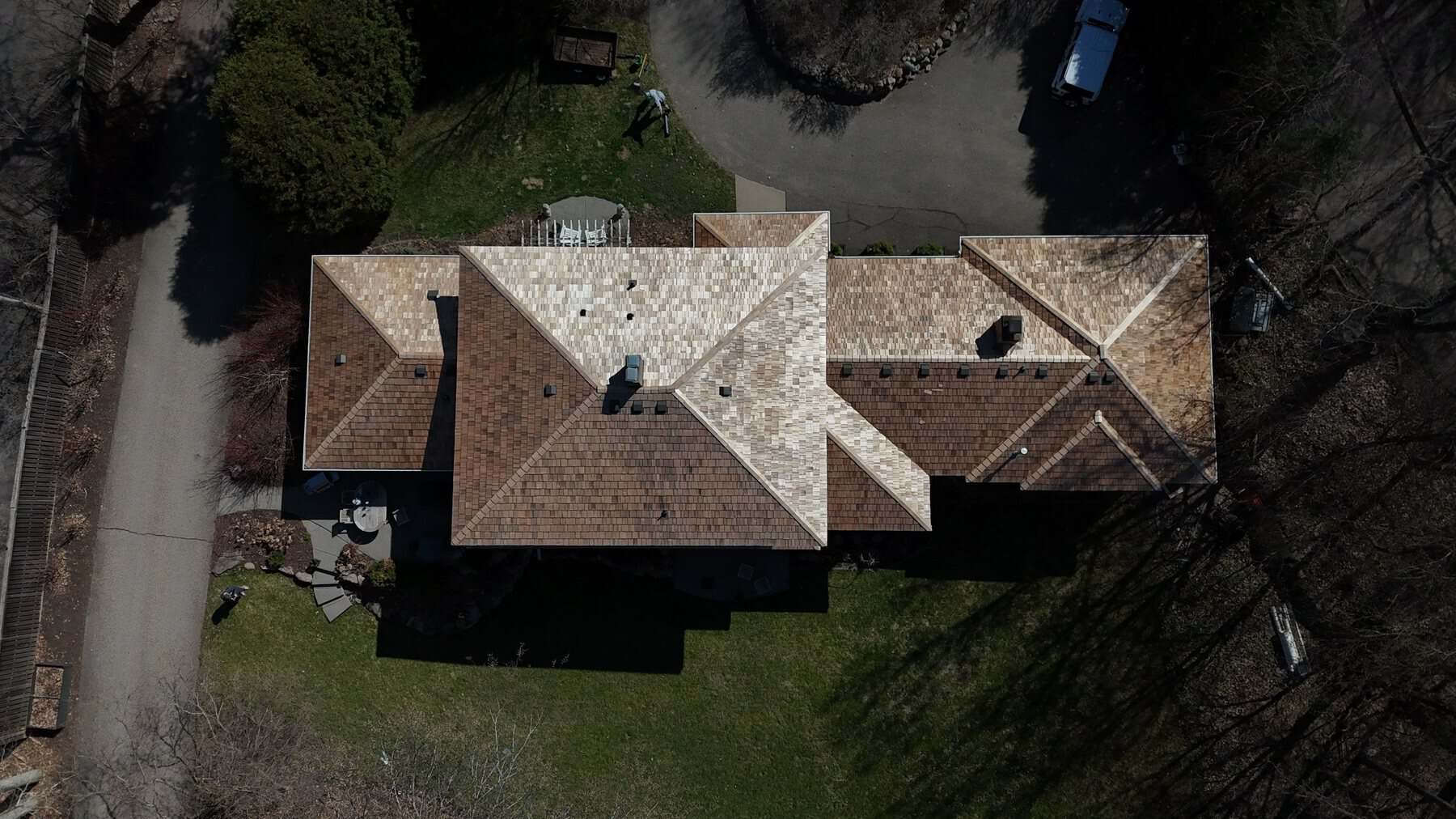
A recent Wayzata cedar shake replacement
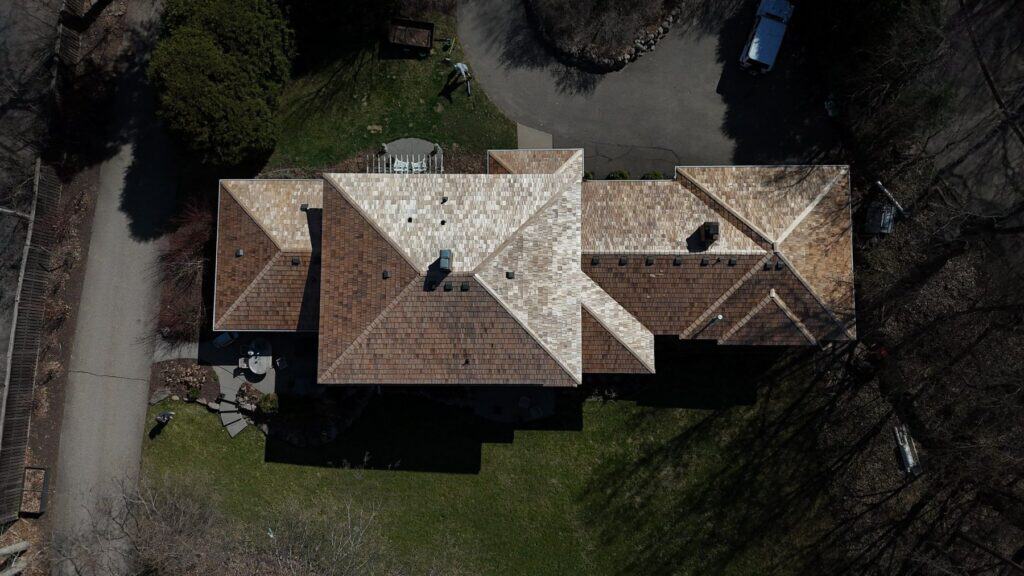
One of our most recent cedar jobs was a full roof replacement on a Wayzata home. The roof came off as asphalt shingles and went back on as 1/2 inch cedar shake. Here is the finished roof from the front and from above:
And here is the same project while the new cedar was going on:
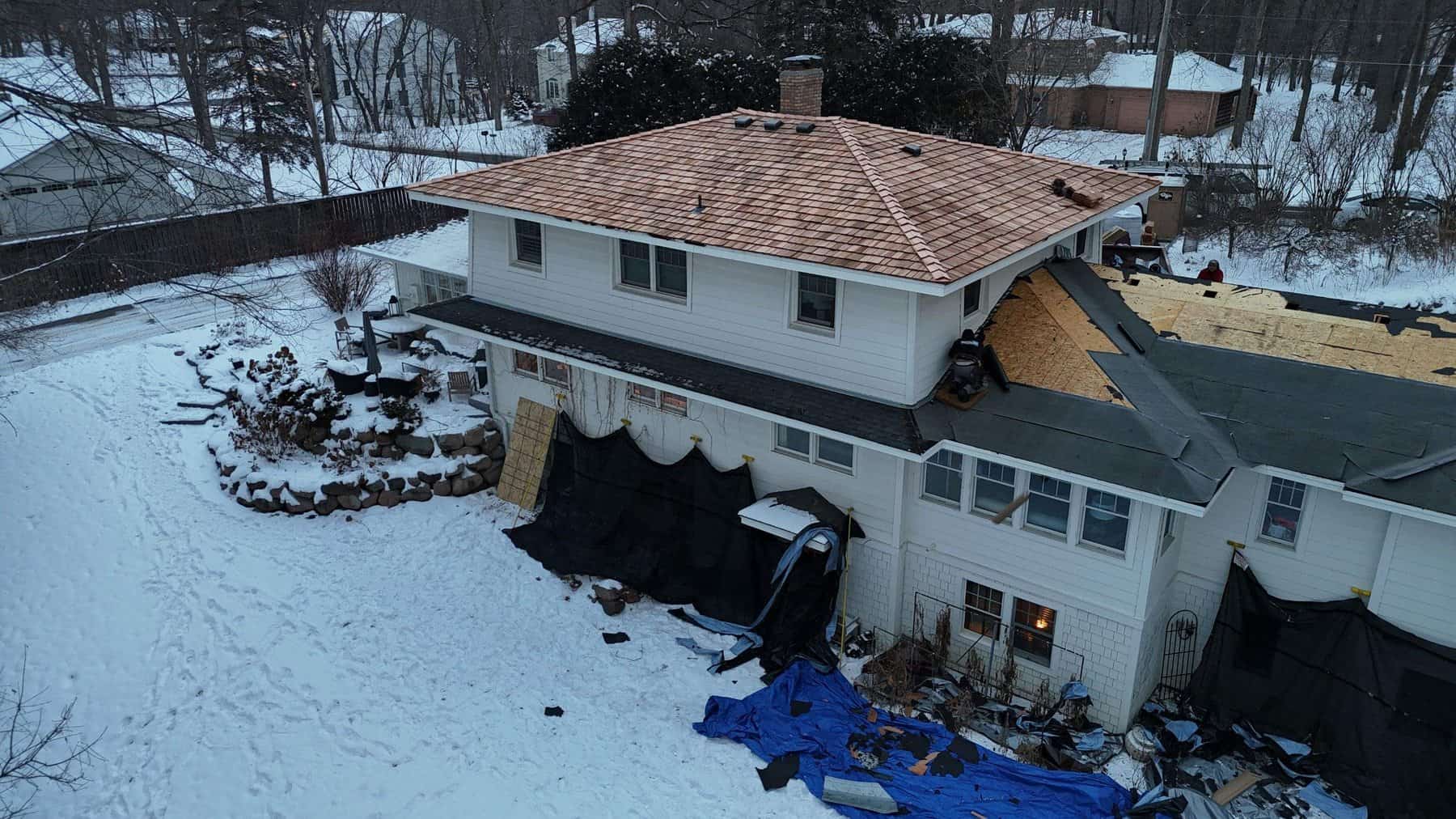
You can see more finished work on our projects page, and our residential roofing page covers the materials we install.
Don’t wait for the renewal deadline
Insurance letters usually come with a deadline for repairs or documentation. Waiting until the last minute narrows your options, especially in the busy season when roofers book out. If you have a letter on your counter, a roof inspection now gives you time to compare repair, cedar, Brava and asphalt on your own schedule.
Have a cedar roof and a letter from your insurer? Request a free estimate and tell us it is a cedar shake roof. You can also call us at 763-762-8934.
Cedar shake roof FAQs
Not necessarily. A letter usually asks for an inspection, repairs or documentation. Get the roof inspected first, then ask your agent whether a report or repairs will satisfy the request.
Typical installed cost with tear-off is about $1,800 to $2,200 per square for 1/2 inch cedar shake and $2,000 to $2,500 per square for 3/4 inch cedar. For a typical 25-square roof, that is roughly $45,000 to $62,500. Roof size, pitch and complexity move the price.
Brava is made to look like hand-split cedar but does not rot, split or need cleaning and treatment. It costs about the same as 1/2 inch cedar up front, typically $1,900 to $2,300 per square installed, and needs much less upkeep.
Yes. Many homeowners switch to architectural asphalt, which typically runs $500 to $800 per square installed in the Twin Cities. Check with your agent about how your policy treats each roofing material before you decide.
Yes. We install new cedar shake roofs, Brava composite cedar shake and architectural asphalt shingles across the Twin Cities. We are a Brava certified contractor.
First Impressions Exteriors is a licensed Minnesota roofing contractor (License BC631617), not an insurance agent, adjuster or attorney. This article is general education, not insurance or legal advice. Coverage depends on your specific policy; confirm the details with your insurance agent. Prices are typical 2026 Twin Cities planning ranges and are not a quote.