Two homes on the same Twin Cities street can take the same hail hit and end up with very different bills. The difference usually isn’t the damage. It’s how the policy pays. Minnesota homeowners insurance settles a storm-damaged roof one of three ways: Replacement Cost Value (RCV), Actual Cash Value (ACV), or a Roof Payment Schedule. Which one you have can move your share of a new roof from your deductible to more than half the total. The time to find out is before the next storm, and it takes about ten minutes with your declarations page. If your insurer sent a letter about an aging cedar roof, our guide to cedar shake, Brava and asphalt replacement options explains what to check next: what to do about an insurance letter on a cedar shake roof.
The three ways insurance pays for a storm-damaged roof
Replacement Cost Value (RCV)
Replacement Cost Value pays what it actually costs to replace your roof with similar new materials, minus your deductible. Most insurers pay it in two steps: a first check for the depreciated value, then the held-back depreciation once the work is completed and documented. Of the three settlement types, RCV is the strongest coverage a homeowner can carry.
Actual Cash Value (ACV)
Actual Cash Value pays what your roof was worth at the time of the storm: replacement cost minus depreciation for age and wear, minus your deductible. That depreciation is not recoverable. The older the roof, the bigger the share that lands on you.
Roof Payment Schedule
A roof payment schedule (sometimes called a roof surface payment schedule) pays a set percentage of replacement cost based on your roof’s age and material. The percentage steps down as the roof gets older, and at 15 to 20 years some schedules pay less than half the cost of a new roof. The table is fixed in the policy, so a well-maintained roof doesn’t earn a better rate.
The quiet change happening at renewal
Across Minnesota, more policies are moving roof settlements from replacement cost toward ACV or payment schedules, and the shift often happens at renewal, buried in paperwork most homeowners skim. You can stay with the same insurance company for years and not have the roof coverage you think you have. If your renewal documents mention a “roof surface payment schedule,” a “roof payment schedule,” or an “actual cash value” roof settlement, that’s a change worth a phone call to your agent. In many cases stronger coverage can be restored for a higher premium, and impact-resistant Class 4 shingles can earn an insurance discount that offsets some of the difference.
Same storm, same roof, three very different bills
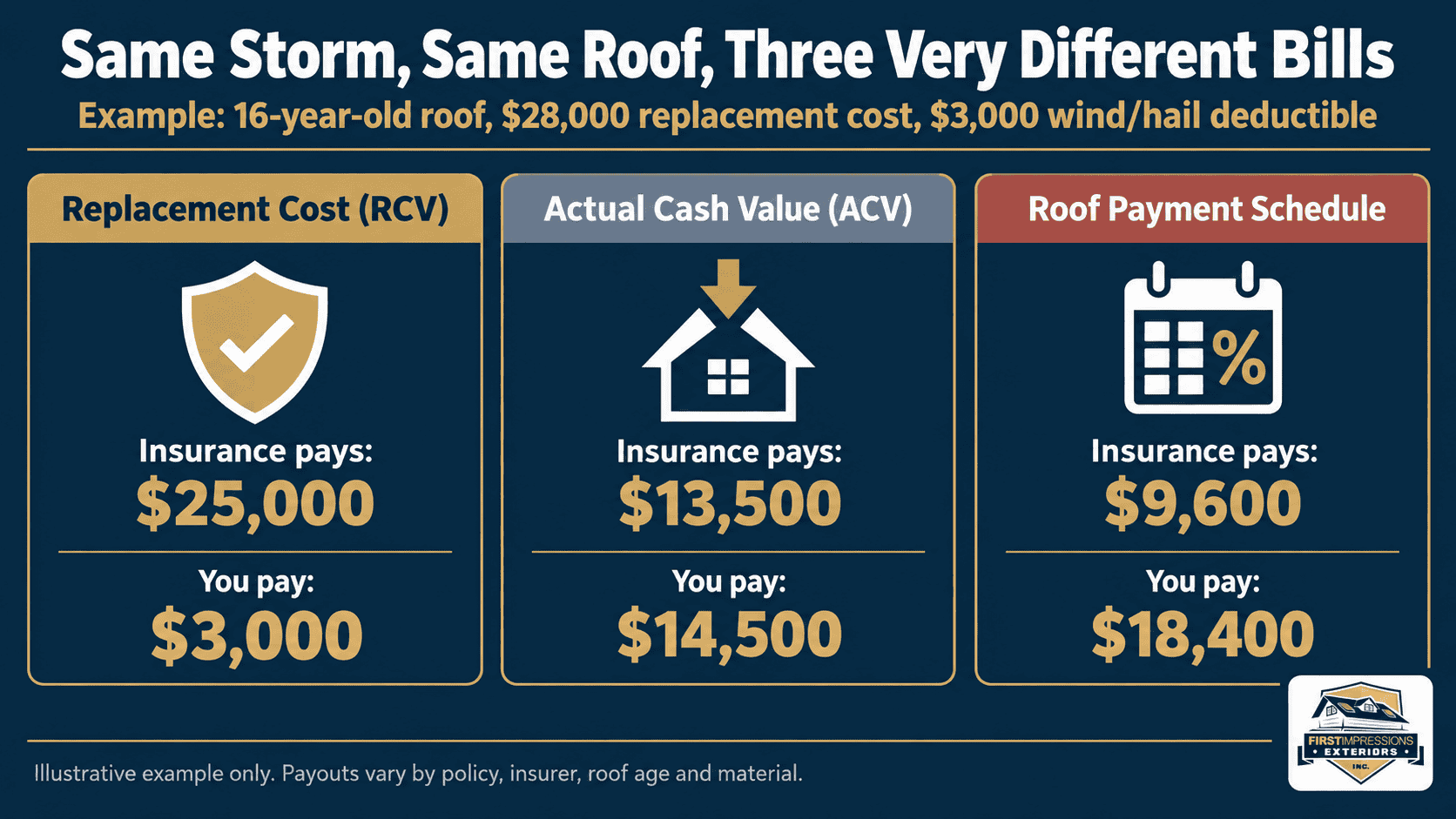
Here’s an illustrative example with round numbers: a 16-year-old roof that costs $28,000 to replace, with a $3,000 wind/hail deductible (1% on a $300,000 insured home). Say depreciation puts its actual cash value at $16,500, and the policy’s payment schedule pays 45% at 16 years:
| Settlement type | Insurance pays | You pay |
|---|---|---|
| Replacement Cost (RCV) | $25,000 | $3,000 |
| Actual Cash Value (ACV) | $13,500 | $14,500 |
| Roof payment schedule | $9,600 | $18,400 |
Example only. Depreciation, schedule percentages and deductibles vary by insurer, policy, endorsement, roof age and material. Your policy and your insurer determine what’s covered.
Five things to find on your declarations page tonight
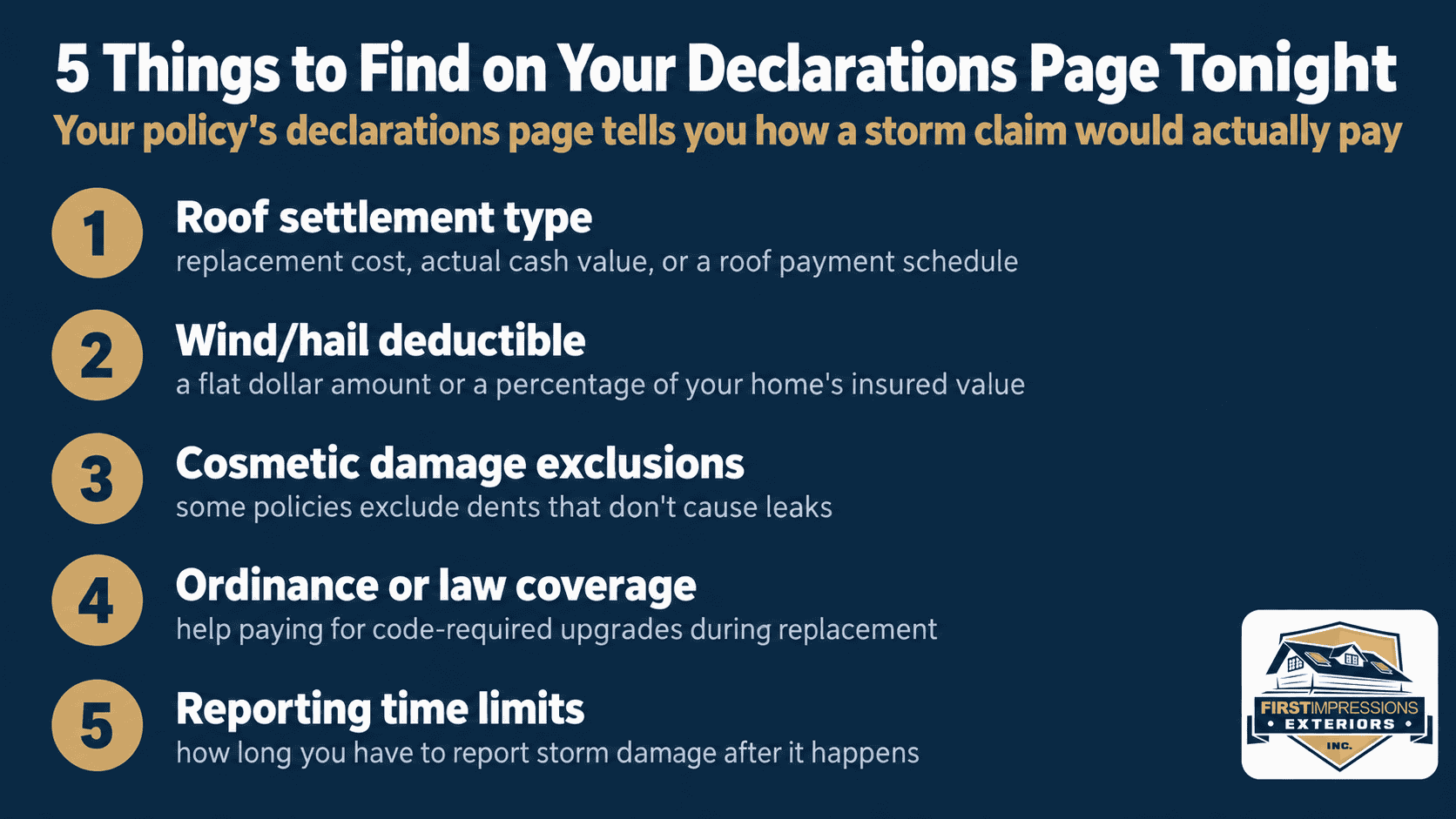
- Roof settlement type. Replacement cost, actual cash value, or a roof payment schedule. This one line decides most of your out-of-pocket cost.
- Wind/hail deductible. A flat dollar amount, or a percentage of your home’s insured value. A 2% deductible on a $400,000 home is $8,000 out of pocket.
- Cosmetic damage exclusions. Some policies won’t pay for dents that don’t cause leaks, especially on metal roofs.
- Ordinance or law coverage. Whether the policy helps pay for items current building code requires during a replacement, like decking, ventilation or ice-and-water shield.
- Reporting time limits. How long you have to report storm damage. Miss the window and the claim can be denied outright.
If anything on that page is unclear, call your insurance agent. A ten-minute conversation now is cheaper than a five-figure surprise after a storm.
Why waiting after a storm costs you
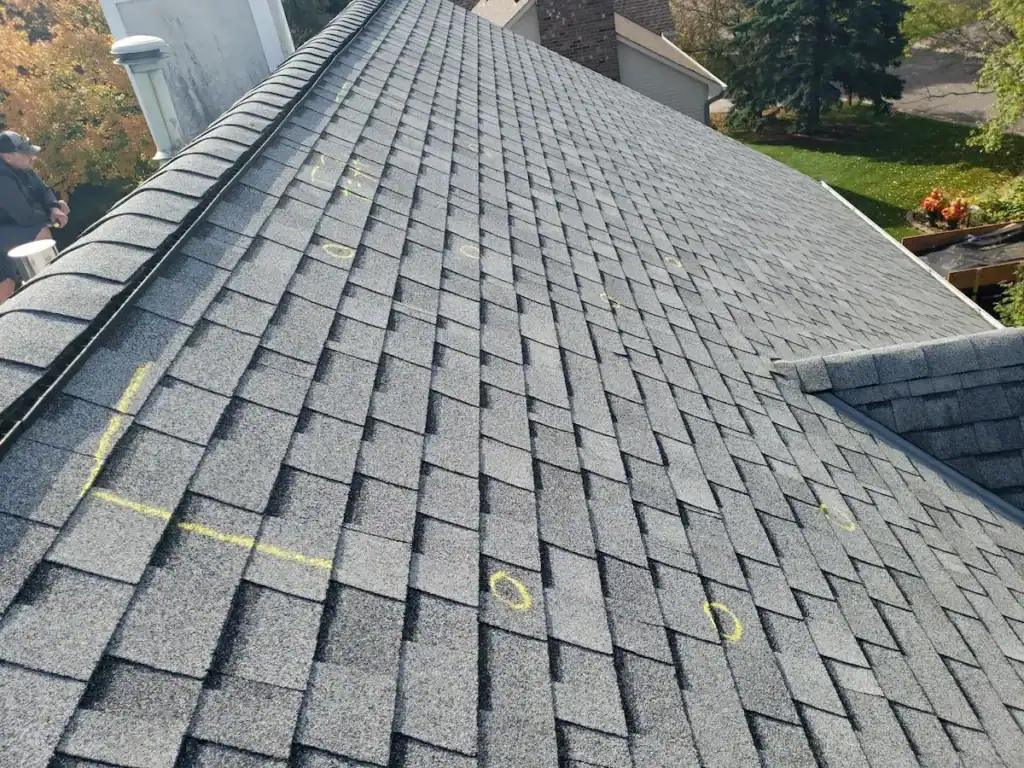
Hail damage doesn’t always leak right away. Bruised shingles shed granules, seals weaken, and small problems turn into leaks over the next few freeze-thaw cycles. The longer damage sits, the harder it is to tie it to a specific storm, and every policy carries reporting deadlines. After each major storm, it’s worth knowing whether your roof took a hit while the evidence is fresh.
What a proper storm inspection gives you
Whatever your policy says, claim decisions get made from evidence. A thorough inspection gives you:
- Date-stamped photos of every slope, plus the siding, gutters, vents and soft metals
- Hail and wind impacts marked and measured
- Notes on roof age, layers, decking and ventilation
- A line-item repair or replacement estimate
That’s what a First Impressions storm damage inspection includes. Our inspections are free across the Twin Cities metro, you keep the photo report, and the decision to file a claim stays between you and your insurer.
A note on deductibles in Minnesota
Minnesota law does not allow a residential roofing contractor to pay, waive or rebate your insurance deductible. Under Minn. Stat. § 325E.66, a contractor who offers to cover any part of your deductible to win your business is breaking the law. If a contractor offers to “cover your deductible,” treat it as a red flag.
Roof insurance FAQs
Check your declarations page and endorsements for wording like “roof surface payment schedule,” “roof payment schedule,” or “actual cash value” on the roof. If the language is unclear, your insurance agent can confirm it in a few minutes.
No. ACV depreciates your roof based on its age and condition at the time of the claim. A roof payment schedule uses a fixed table of percentages based on age and material, set in advance. Both can leave a large out-of-pocket share on older roofs.
Often, yes, at renewal, usually for a higher premium. Some insurers limit replacement cost coverage on older roofs. Ask your agent what the upgrade would cost; it’s frequently less than the gap a claim would expose.
No. We inspect, document and show you what we find. Whether to file is your decision, made with your insurance agent or insurer.
No. Our storm inspections are free across the Twin Cities metro, and you keep the complete photo report whether or not you move forward with anything.
First Impressions Exteriors is a licensed Minnesota roofing contractor (License BC631617), not an insurance agent, adjuster or attorney. This article is general education, not insurance or legal advice. Coverage depends on your specific policy; confirm the details with your insurance agent.