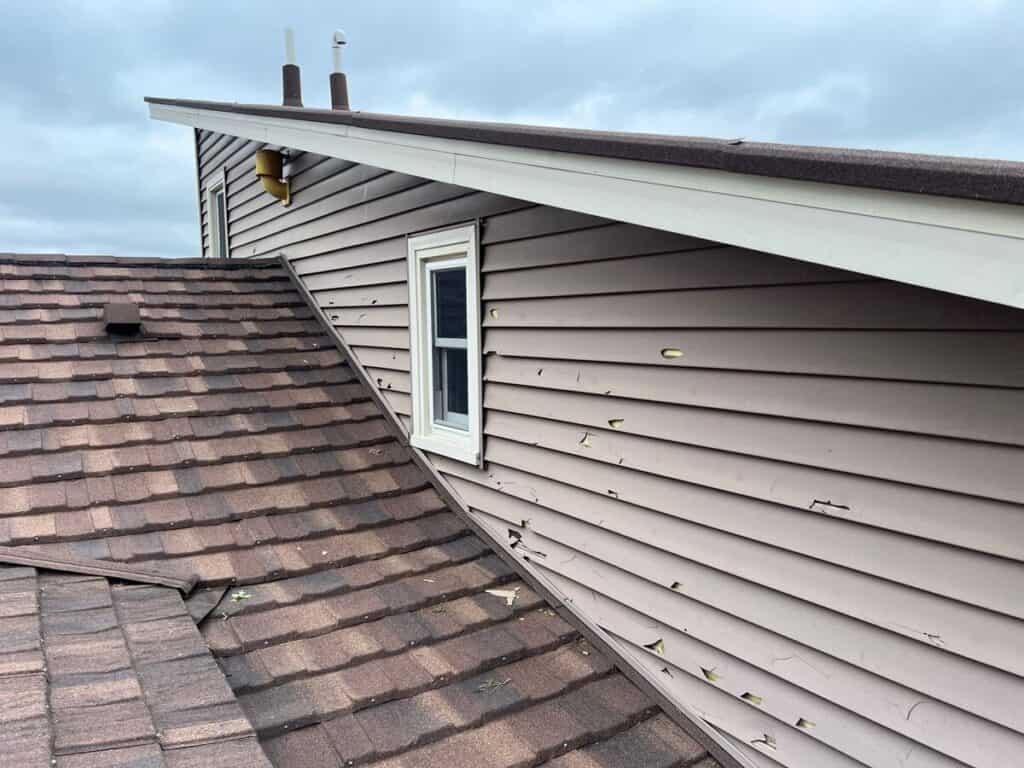
After a Twin Cities hailstorm, the roof gets most of the attention. That makes sense, but it also means siding damage is easy to miss. Wind-driven hail can strike one or two sides of a house hard enough to crack vinyl panels, chip fiber cement, dent metal, and open small gaps where water can get behind the wall. The roof needs the same close look, and we covered that separately in our guide on how to identify hail damage on your roof.
The damage may look cosmetic from the yard. Sometimes it is. Other times a small crack or broken edge is the first step toward moisture getting into the sheathing, insulation, or window openings. Here is what Minnesota homeowners should check and how we document siding damage during a storm inspection.
In This Article
ToggleWhy siding damage is easy to overlook
Roof damage is mostly above your line of sight. Siding is right in front of you, but hail marks can still blend in with dirt, shadows, and normal wear. The storm-facing wall may be damaged while the other three sides look untouched. On darker colors, fresh impact marks can be easier to see. On light or textured panels, they can disappear unless you look from an angle.
Damage also changes by material. A mark that matters on vinyl siding may look completely different on steel or fiber cement. That is why a quick walk around the house should be systematic rather than a glance from the driveway.
Start with the direction of the storm
Hail rarely falls straight down. Strong wind pushes it sideways, so one elevation often takes most of the damage. Walk all four sides of the house and compare them. Pay extra attention to the walls where window screens are torn, downspouts are dented, or outdoor fixtures have fresh impact marks.
Those collateral clues help establish the direction and intensity of the storm. If a downspout looks peppered with dents but the nearby siding looks clean, inspect the siding again in raking light. Damage may be present without standing out head-on.
What hail damage looks like on vinyl siding
Vinyl can crack, split, chip, or break around panel edges. Look for:
Round cracks or small punctures in the face of a panel
Broken lower edges, especially where one course locks into the next
Loose panels that move or rattle after the storm
Bright spots where the outer color layer has been knocked away
Damage around corners, utility penetrations, and window trim
Vinyl gets more brittle as it ages and during cold weather. The same hailstone that leaves a faint mark on newer siding can punch through an older panel. Once a panel is cracked, wind and temperature changes can make the opening spread.
What hail damage looks like on fiber cement and engineered wood
Fiber cement is tough, but it is not immune. Hail may leave chips, surface craters, fractures, or broken corners. Watch for exposed gray material beneath the finish and hairline cracks radiating from an impact point.
Engineered wood siding can show chipped coatings, dents, or compressed areas. The biggest concern is a broken finish that exposes the material underneath. Minnesota’s rain, snow, and freeze-thaw cycles are hard on any unsealed edge, so prompt evaluation matters even when the damaged spot is small.
What hail damage looks like on steel and aluminum siding
Metal siding usually dents instead of cracking. The marks are often easiest to see early or late in the day when light runs across the wall. Stand to the side and look along the panels rather than straight at them.
Some dents are cosmetic. Others affect seams, fasteners, or the way panels shed water. Aluminum can also lose paint at the impact point. A professional inspection should separate harmless surface marks from damage that affects performance or warrants replacement under the policy.
Do not forget trim, windows, and other elevations
A siding inspection should include more than the field of the wall. Check:
Window screens, frames, and wraps
Corner posts and J-channel
Fascia and soffit
Gutters and downspouts
Garage doors
Exterior lights, vents, and utility covers
Deck rails, fences, and painted surfaces
These items help tell the story of the storm. They can also be separate damaged components that belong in the repair scope. Photos of collateral damage are especially useful when the siding mark itself is subtle.
Can one damaged panel be repaired?
Sometimes. It depends on the material, the location, how the siding is installed, and whether a matching product is still available. A newer vinyl panel in a common color may be replaceable. An older discontinued profile may not be.
Color is part of the problem. Even if the original product still exists, years of sun exposure can make a new panel stand out. That does not automatically mean every wall will be replaced, but it does mean the repair needs to be evaluated in context. A contractor should identify the manufacturer and profile when possible, check availability, and explain what a realistic finished repair will look like.
For fiber cement, engineered wood, or metal, the repair decision also depends on whether removing one piece will disturb surrounding material. The goal is not to turn a small claim into a bigger project. It is to make a durable repair without creating a new leak or an obviously mismatched patch. When damage runs across several elevations or the original product is discontinued, partial or full siding replacement is usually the cleaner path.
If the damage pushes you toward replacement, our 2026 guide breaks down siding replacement costs in Minnesota by material and tear-off.
What to do before filing a claim
Photograph the house before temporary repairs or cleanup change the evidence. Take wide photos of each elevation, then closer photos of cracks, chips, dents, and collateral marks. Save the storm date and approximate time if you know it.
Then get a local hail and wind damage inspection. A good contractor should inspect the roof, siding, gutters, windows, and exterior as one system. That gives you a better basis for deciding whether the damage is minor, repairable out of pocket, or worth reporting to insurance. If the roof took hits too, it helps to know how hail damage affects your shingles before that visit.
Do not sign a broad contract at the door just because a crew says your siding is damaged. Ask what they found, which elevations are affected, whether the material can be matched, and what documentation they will give you. You should understand the condition before committing to work.
How First Impressions Exteriors documents siding damage
We photograph every elevation, note the storm-facing sides, record collateral damage, and identify the siding material and profile when possible. If repair appears practical, we say so. If matching or installation constraints make a spot repair unrealistic, we explain why and document that for the homeowner and adjuster.
Because we handle roofing, siding, gutters, and other exterior work, we can inspect the whole property instead of treating each surface as a separate problem. That matters after a wind-driven hailstorm, where damage often crosses several trades.
If hail moved through your neighborhood, call First Impressions Exteriors at 763-762-8934 or schedule a free estimate. We serve Golden Valley, Minneapolis, St. Paul, and the surrounding Twin Cities metro.