
In This Article
ToggleHow Much Does a Roof Replacement Cost in Minnesota?
If you have searched roof replacement cost in Minnesota, you have probably noticed the numbers are all over the place. One site says nine thousand, another says twenty thousand, another says forty. None of them have seen your roof, and most are working from national averages rather than real Twin Cities jobs.
For most Twin Cities homeowners, an architectural asphalt roof replacement typically falls somewhere between about $500 and $700 per roofing square installed, but the final cost depends on your roof’s size, pitch, complexity, materials, ventilation, and decking condition.
This guide explains how roofing is actually priced here, what moves the number up or down, and what a complete job should include, so you can tell a fair quote from a lowball.
One note up front. Material pricing has been moving quickly over the last few years, so treat every figure here as a general range rather than a firm quote. The only real number comes from an inspection of your specific roof.
Estimate your roof replacement cost in minutes
If you want a ballpark before anyone comes out, our instant estimate tool gives you a real starting number using aerial measurements of your roof and current Minnesota pricing. It is a fast way to get oriented, with no salesperson at your door and no obligation.
Get your estimate here: Instant Roof Estimate
An instant estimate is a starting point, not a final quote. The exact number still depends on what we find when we inspect the roof in person.
Why roof replacement cost in Minnesota is hard to pin down
Roofing is priced by the square, and a square is 100 square feet of roof surface. Your roof square count is not the same as your home’s floor area, because it includes overhangs and grows with steeper pitches.
A typical Twin Cities home runs somewhere in the range of 20 to 30 squares, though that varies with size and roof shape. A simple 4/12 roof is much easier to work on than a steep 12/12 roof, even if the homes look similar from the street.
That per-square pricing is why two houses on the same block can get very different quotes for the same shingle. One has a simple walkable roof and the other has steep pitches, multiple valleys, dormers, intersecting roof sections, skylights, chimneys, and old decking underneath. Both quotes can be honest.
National cost tools cannot see any of that, which is why their averages swing so widely. Even reputable data like the Remodeling Cost vs. Value report shows roofing costs varying by region and project, which is worth keeping in mind when a calculator hands you a single confident number.
Roof replacement cost by home size
Homeowners think in home square footage, but roofers think in squares, and the two are not the same. Your roof is almost always larger than your home’s floor area because of overhangs, and it grows as the pitch gets steeper.
As a rough guide:
- A 1,500 square foot home often lands around 16 to 20 roofing squares.
- A 2,000 square foot home often lands around 20 to 25 roofing squares.
- A 2,500 square foot home often lands around 25 to 30 roofing squares.
These are general ranges, since pitch, overhang, and roof shape all shift the count. This is also why asking a contractor for their square count, and how they measured it, is a fair question when you compare quotes.
Roof replacement cost by material
These are general Twin Cities ranges, priced per square. Because material costs shift with the market, use them to understand relative differences between materials, not as a firm quote.
Architectural asphalt shingles, which are the most common choice on Minnesota homes, generally run about $500 to $700 per square installed.
Upgrading to a Class 4 impact resistant shingle typically adds about $30 to $50 per square, depending on the manufacturer. In a hail market like ours, that upgrade often pays for itself, both in durability and in the premium discounts many Minnesota insurers offer for impact resistant roofs. Discounts vary by carrier and policy, so it is worth confirming with your insurance agent before choosing a shingle based on a discount alone.
Metal roofing is a premium system and generally runs about $1,300 to $2,000 per square. It costs more up front, but a quality metal roof can last far longer than asphalt, which makes it worth considering if you plan to stay in your home long term.
What actually moves the price
Beyond material, a handful of factors explain most of the variation between quotes.
Roof size is the biggest one. More squares means more material and more labor.
Pitch matters more than most homeowners expect. A roof in the 8/12 to 9/12 range adds some cost because it is harder to walk and work. A 12/12 or steeper roof adds quite a bit more, because it changes how the entire job has to be staged and slows everything down.
Access and complexity are often the real drivers. Difficult access, tight lots, multiple valleys, dormers, intersecting roof sections, skylights, and chimneys all add detail work. Multiple stories add a little, but access difficulty tends to matter more than height alone.
Decking is the part homeowners rarely see coming. Once the old roof is off, we inspect the decking and replace anything rotted, damaged, or not up to code. Older homes, which are common in parts of St. Paul and Minneapolis, often have plank board decking rather than modern plywood sheathing, and that changes how repairs are priced.
We usually cannot know how much decking needs work until the roof is torn off, so unless we already know going in, decking is added on the final invoice rather than guessed at in the quote. Our current rate is $75 per sheet of plywood decking, and about $8 per linear foot for plank board replacement. Those have held steady for a while.
What a proper Minnesota reroof includes
A big reason quotes differ is that not every quote covers the same work. A cheap number often means something was left out, and in our climate the things that get cut are usually the things that keep water out of your house.
Minnesota code and manufacturer installation requirements set a baseline here, and a proper job meets both. Every manufacturer has its own installation requirements. A quality contractor follows both the building code and the manufacturer’s published instructions to help protect the roof system and preserve the warranty.
A complete Minnesota reroof should include:
- A full tear-off, followed by inspection of the decking.
- Repair or replacement of rotted, damaged, or non-code-compliant decking.
- Ice and water shield installed from the eave to two feet past the interior heated wall, which is usually two rows and sometimes three depending on the overhang.
- Ice and water shield in the valleys.
- Synthetic underlayment across the rest of the roof. Synthetic underlayment provides better tear resistance and weather protection than traditional felt paper.
- Drip edge on all rakes and eaves.
- Starter shingles on all rakes and eaves.
- New flashing for pipe jacks, chimneys, and wall intersections where needed.
- New or upgraded ventilation.
- Jobsite cleanup during the project and a final deep clean, including a magnetic nail sweep, within 24 hours.
- The permit, which a licensed contractor pulls and coordinates with the city inspection.
Ventilation deserves special attention in Minnesota. Intake ventilation, exhaust ventilation, balanced airflow, and proper ridge vent sizing all affect how the roof performs. Poor ventilation can shorten shingle life and contribute to winter moisture and ice dam issues.
Why did I receive two roofing quotes that are $5,000 apart?
This is one of the most common questions we hear, and the answer is almost always scope. Two quotes for the same house can differ by thousands of dollars, and both can be honest, because they are not pricing the same work.
Here is where the difference usually hides:
- Ice and water shield coverage
- Ventilation upgrades
- Flashing replacement
- Starter shingles
- Drip edge
- Valley details
- Permit costs
- Cleanup expectations
- Decking assumptions
- Workmanship warranty
- Manufacturer certification
- Product quality
A lower quote might reuse flashing, leave the old vents in place, use minimal ice and water shield, skip a permit, or stay silent on decking until the final invoice. A higher quote may include those items up front.
The lowest quote is not always the lowest total cost once shortcuts and change orders are taken into account. The only way to compare quotes fairly is to line up what each one actually includes. If one is far lower, ask which of the items above it covers, and the gap usually explains itself.
It is also worth asking whether the contractor is certified by the manufacturer whose shingles they are installing. Manufacturer certifications do not guarantee a perfect job, but they are one more sign that the contractor understands the system they are putting on your home.
Lowest quote versus complete quote
Here is a simple way to think about the difference:
| Lowest Quote | More Complete Quote |
|---|---|
| Reuses old flashing | Replaces or properly reflashes critical areas |
| Minimal ice and water shield | Ice and water shield installed to code and manufacturer requirements |
| Leaves old ventilation as-is | Reviews intake, exhaust, and balance |
| Vague decking language | Explains decking rates and when they apply |
| Basic cleanup | Final cleanup and magnetic nail sweep |
| Short or unclear warranty | Written workmanship warranty |
| No clear permit language | Permit included and coordinated |
| Off-brand or unclear materials | Named shingle system and accessories |
This does not mean the highest quote is always the best quote. It means the scope matters more than the headline number.
Insurance versus paying out of pocket
Roughly half the roofs we replace are storm and insurance jobs, and the other half are paid out of pocket. Both are common, and what you pay looks very different depending on which one you are in.
If a hail or wind storm damaged your roof and it is a covered claim, your policy generally pays to replace the roof and you are responsible for your deductible. The specifics depend on your policy, including whether it pays replacement cost value or actual cash value.
It is worth having a licensed contractor document the damage, and you can read more on our hail and wind damage page. Twin Cities suburbs like Plymouth, Maple Grove, Minnetonka, and Edina see regular hail and wind events, so this is a familiar path for a lot of homeowners here.
We are also seeing more out-of-pocket replacements lately for reasons that have nothing to do with storms. Homes in the process of being sold where the buyer requires a new roof, and homeowners whose insurers have dropped them or raised premiums enough that replacing the roof themselves makes more sense. If that is your situation, the cost factors above are what shape your number.
Do you always need a full replacement?
Not always. If the damage is limited and the rest of the roof is sound, a targeted repair can be the smarter move. The right call comes from looking at the whole roof rather than the one visible problem. You can learn more about our roof repair work, and if you are on the fence, an honest inspection should tell you which direction makes sense.
How long the roof lasts also factors into the decision. A well installed asphalt roof in Minnesota generally lasts a couple of decades, though hail, UV exposure, ice dams, and poor ventilation can shorten that. We cover this in detail in our post on how long a roof lasts in Minnesota, linked below.
Is it cheaper to reroof over existing shingles?
Sometimes a roof-over looks cheaper at first, but it is usually not the best long-term option. Installing new shingles over old shingles limits the contractor’s ability to inspect the decking, hides potential rot or soft spots, and can affect how the new roof lays and performs.
A full tear-off gives the contractor a clean surface, allows the decking to be inspected, and helps ensure the roof system is installed correctly. It also makes it easier to follow manufacturer requirements and avoid warranty issues. For most Minnesota homes, especially homes with storm damage, aging shingles, or unknown decking condition, a full tear-off is the better choice.
Financing a roof replacement
A roof is a large, often unplanned expense, and paying the full amount at once is not realistic for everyone. We offer financing, which can be a good option for spreading the cost out while still getting the work done right the first time.
It is worth asking about financing early, since it can shape how you plan the project, which material options make sense, and whether you want to complete related work at the same time.
Real-world example: why two similar roofs can cost different amounts
We often inspect homes that look similar from the street but price very differently once the details are reviewed. One home may have a simple walkable roof with clean plywood decking, while another may have steep sections, multiple valleys, poor attic ventilation, and older plank board decking hidden under the shingles.
Even if both roofs are close in size, those hidden conditions can change the final cost by several thousand dollars. That is why a real inspection matters more than an online average.
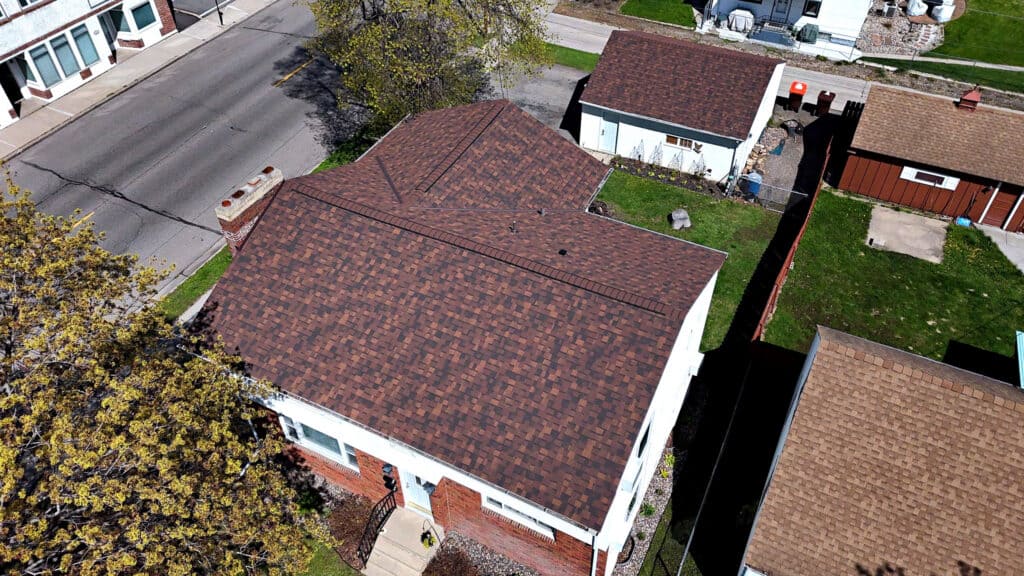
Featured Project
| Location | St. Paul, Minnesota |
| Roof Size | 25 Squares |
| Reason for Replacement | Age and deterioration of the existing roofing system. |
| Product Installed | Owens Corning Duration® shingles in Brownwood. |
| Decking Replaced | None required. |
| Final Result | A durable new roofing system that refreshed the home's appearance while providing long-term protection with Owens Corning Duration architectural shingles. |
What you get from a First Impressions Exteriors inspection
When we come out, the goal is to give you a clear picture of your roof and a number you can trust, not a pressure pitch.
A free roof inspection includes:
- Complete roof evaluation
- Attic ventilation review
- Photos of any concerns
- Written proposal
- No-obligation estimate
- Clear explanation of repair versus replacement options when applicable
That means even if you are early in your research, an inspection is a low-risk way to find out what your roof actually needs.
Why homeowners trust First Impressions Exteriors
First Impressions Exteriors is a locally owned exterior remodeling contractor serving homeowners throughout Minnesota and Wisconsin. We work on roofing, siding, windows, gutters, storm damage restoration, and related exterior repairs.
Homeowners choose us because we provide detailed inspections, clear scopes of work, project documentation, quality materials, and a 10-year workmanship warranty on residential projects. Our goal is simple: explain what your home needs, price it clearly, and do the work the right way.
The bottom line
There is no honest way to give you an exact roof replacement cost in Minnesota without seeing your roof. Material, size, pitch, access, decking condition, ventilation, and the scope of the work all move the number, and pricing shifts with the market on top of that.
What you can do is understand how roofing is priced, know what a complete job includes, and use that to compare quotes on the same terms.
When you are ready, start with an Instant Roof Estimate, learn more about our residential roofing work, or contact us to schedule a free roof inspection.
Frequently Asked Questions
How much does a roof replacement cost in Minnesota?
It depends heavily on your roof, but as a general guide, architectural asphalt shingles in the Twin Cities run roughly $500 to $700 per square installed, with a typical home falling somewhere in the 20 to 30 square range. Material pricing moves with the market, and factors like pitch, access, ventilation, and decking condition change the total. The only accurate number comes from an inspection of your specific roof.
What is a roofing square?
A square is 100 square feet of roof surface, and it is the unit roofers use to price a job. Your roof square count is larger than your home’s floor area, because it includes overhangs and increases with steeper pitches. A typical Twin Cities home has about 20 to 30 squares, which is why homes that look similar from the street can carry different roofing costs.
Why are roofing cost estimates online so different?
Because most online tools work from national averages and cannot see your actual roof. Pitch, complexity, access, decking condition, ventilation, and local labor all move the price, and none of that shows up in a calculator. Treat online numbers as rough context, not a real quote.
How long does a roof replacement take?
Most residential roof replacements in the Twin Cities are completed in one to three days, depending on the size of the roof, its complexity, and the weather. Steeper roofs, multiple tear-off layers, or significant decking repairs add time. What matters more than speed is whether the crew is supervised and the site is protected and cleaned up properly, so it is fair to ask who will be managing the job day to day.
Can a roof be replaced during a Minnesota winter?
Yes, roofs are replaced year round here, but cold weather adds real considerations. Asphalt shingles rely on heat to seal, and in very cold temperatures they may not seal properly until it warms up, so careful winter installs sometimes involve hand-sealing and extra attention to detail. Emergency and necessary replacements happen in winter all the time. For planned projects, many homeowners prefer spring through fall.
Is it better to repair or replace my roof?
It depends on the age and condition of the roof and how widespread the problem is. If the damage is isolated and the rest of the roof has life left, a repair is often the smarter spend. If the roof is aging, has multiple issues, or has taken significant storm damage, replacement usually makes more financial sense over time. An honest inspection that looks at the whole roof, not just the visible spot, is the way to decide.
Is it cheaper to reroof over existing shingles?
A roof-over may look cheaper at first, but it can hide decking problems, affect how the new shingles lay, and create warranty concerns. A full tear-off allows the contractor to inspect the decking, replace damaged areas, and install the new roof system correctly. For most Minnesota homes, a full tear-off is the better long-term option.
Does decking replacement cost extra?
Usually yes, and it is often added after tear-off. We cannot see the condition of the decking until the old roof is removed, so unless we already know it needs work, decking is added on the final invoice rather than estimated blind. Our current rate is $75 per sheet of plywood, and about $8 per linear foot for plank board replacement, which comes up more often on older homes.
Will insurance pay for my roof replacement in Minnesota?
If a storm caused the damage and it is a covered claim, your policy generally pays to replace the roof while you cover your deductible. The details depend on your policy, including whether it pays replacement cost value or actual cash value. Having a licensed contractor document the damage before the adjuster visit is worth doing, since undocumented damage is easier for a claim to miss.
Do you offer financing for a new roof?
Yes. A roof is often an unexpected expense, and financing can be a practical way to spread the cost out while still getting the job done correctly. It is worth asking about early, since it can affect how you plan the project and which options make sense for your budget.