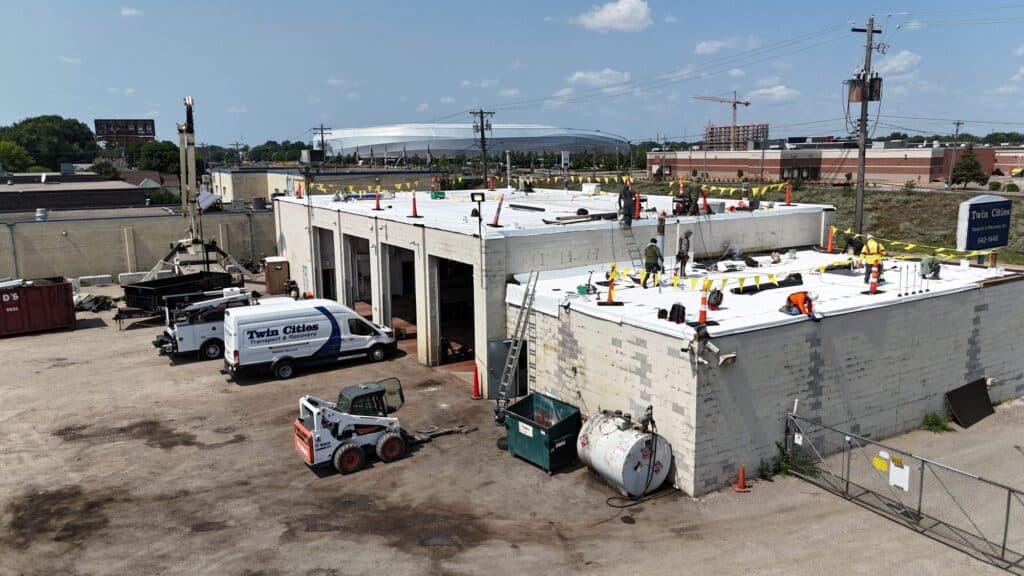
How to Inspect a TPO Roof: A Practical Guide for Twin Cities Building Owners
Low-slope roofs need regular attention to keep small issues from becoming costly disruptions. For commercial properties in Minnesota, a roof inspection is a chance to check the parts most exposed to water, movement, and weather: the membrane, seams, flashings, penetrations, and drainage areas. First Impressions Exteriors installs TPO low-slope roofing and provides commercial roof inspections, maintenance, and repairs.

A visual inspection does not replace a roof assessment by a qualified professional, and the right maintenance plan depends on the roof system, access conditions, and manufacturer requirements. Here are the areas building owners should ask a roofer to review.

1. Membrane condition
Look for visible punctures, cuts, open edges, surface wear, or areas where debris may have affected the membrane. Keep foot traffic to authorized service personnel and avoid probing or patching the roof yourself. A professional can document concerns and determine whether they need repair.
2. Seams and transitions
Single-ply systems rely on joined membrane sections and carefully finished transitions. Ask the inspector to look at seams and places where the roof meets a wall, curb, or other change in height. If a seam looks separated or a transition has lifted, document its location and have a roofing professional assess it.
3. Flashings and penetrations
Vents, pipes, curbs, and equipment create openings in the roof assembly. Each one needs a compatible, properly maintained flashing detail. Check for visible gaps, splits, or loose edges around the base of penetrations and along wall and perimeter flashings. Do not assume a bead of sealant is a permanent fix; have the detail inspected and repaired using materials suited to that roof system.
4. Drains and water flow
Keep roof drains and nearby areas clear of leaves, trash, and other debris. Ask the inspector to check that drains, strainers, and overflow routes are open and that water can move toward the intended drainage points. Standing water after rain can have several causes, so record where and how long it remains rather than assuming the roof is failing. Any changes to drainage should be evaluated by a qualified roofing or design professional.
5. Rooftop equipment and access
HVAC servicing and other trades can bring foot traffic, tools, and equipment onto a low-slope roof. After service visits or construction work, check for debris and visible damage around equipment, walk paths, and access points. Keep a record of who has been on the roof and when, and ask contractors to report any accidental damage promptly.
How often should a TPO roof be inspected?
There is no single inspection schedule for every roof. A useful starting point is a documented inspection in spring and fall, plus an inspection after a major storm or other event that could affect the roof. Adjust the schedule to the roof manufacturer’s care instructions, the building’s maintenance plan, and the roof’s condition. Keep notes and photos so changes can be compared over time.
What should a roof inspection report include?
Ask for the inspection date, areas reviewed, photos of any concerns, locations of observed issues, recommended next steps, and a record of repairs completed. A clear report makes it easier to track recurring concerns and plan maintenance. It should distinguish observed conditions from recommendations or assumptions about the cause.
Common questions about TPO roof inspections
Can I walk on a TPO roof to inspect it myself?
Roof access can involve fall hazards and may damage the roof. Owners should follow their site safety plan and let trained, authorized personnel inspect the roof. Do not access a roof without proper training, fall protection, and permission.
Does a TPO roof need maintenance?
Yes. Like other roofing systems, TPO roofs benefit from regular inspections and maintenance. Clearing drains and debris, documenting changes, and arranging qualified repairs can help building owners manage the roof over time.
Is standing water always a leak?
No. Water remaining after rain is an observation, not a diagnosis. Document its location and duration, and ask a qualified professional to assess drainage and the roof assembly.
Can I use any sealant on a TPO roof?
Do not assume a general-purpose sealant is suitable. Repair and maintenance materials should be selected for compatibility with the roof system and manufacturer guidance.
FIE’s commercial roofing team works with low-slope TPO systems across the Twin Cities. If you manage a building and want a professional assessment, learn about FIE commercial roofing services or schedule an estimate.