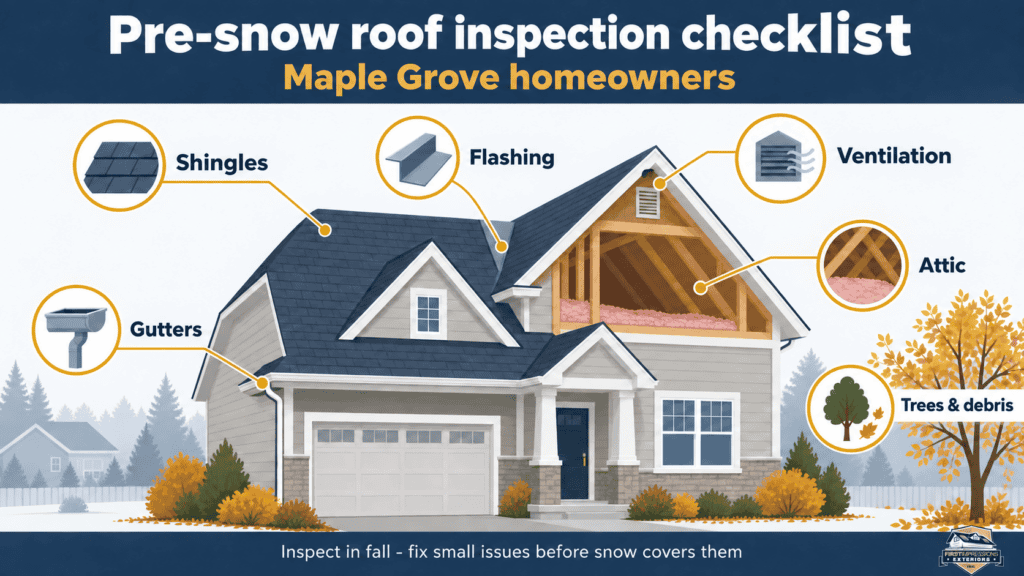
Maple Grove Roof Inspections Before the First Snow (2026): What to Check Now
The first lasting snowfall changes roof work in a hurry. Once snow covers the shingles, small defects become harder to see, safe access gets more complicated, and a minor leak can sit unnoticed until it stains a ceiling. For Maple Grove homeowners, a fall roof inspection is a practical way to find loose materials, drainage problems, and vulnerable flashing while there is still time to make repairs.
A pre-winter inspection is not a prediction that your roof will fail. It is a clear look at the parts most likely to cause trouble when repeated freeze-thaw cycles, wind, and snow arrive.
Why Maple Grove roofs benefit from a fall inspection
Maple Grove has a broad mix of established neighborhoods and newer construction. Roof age, tree cover, drainage layout, and the number of valleys or roof-to-wall transitions can vary from one block to the next. That means a useful inspection should be specific to the house, not a generic checklist completed from the driveway.
The best timing is after most leaves have fallen but before snow stays on the roof. At that point, an inspector can see the surface clearly and check whether gutters, valleys, and downspouts are ready to move water away from the house.
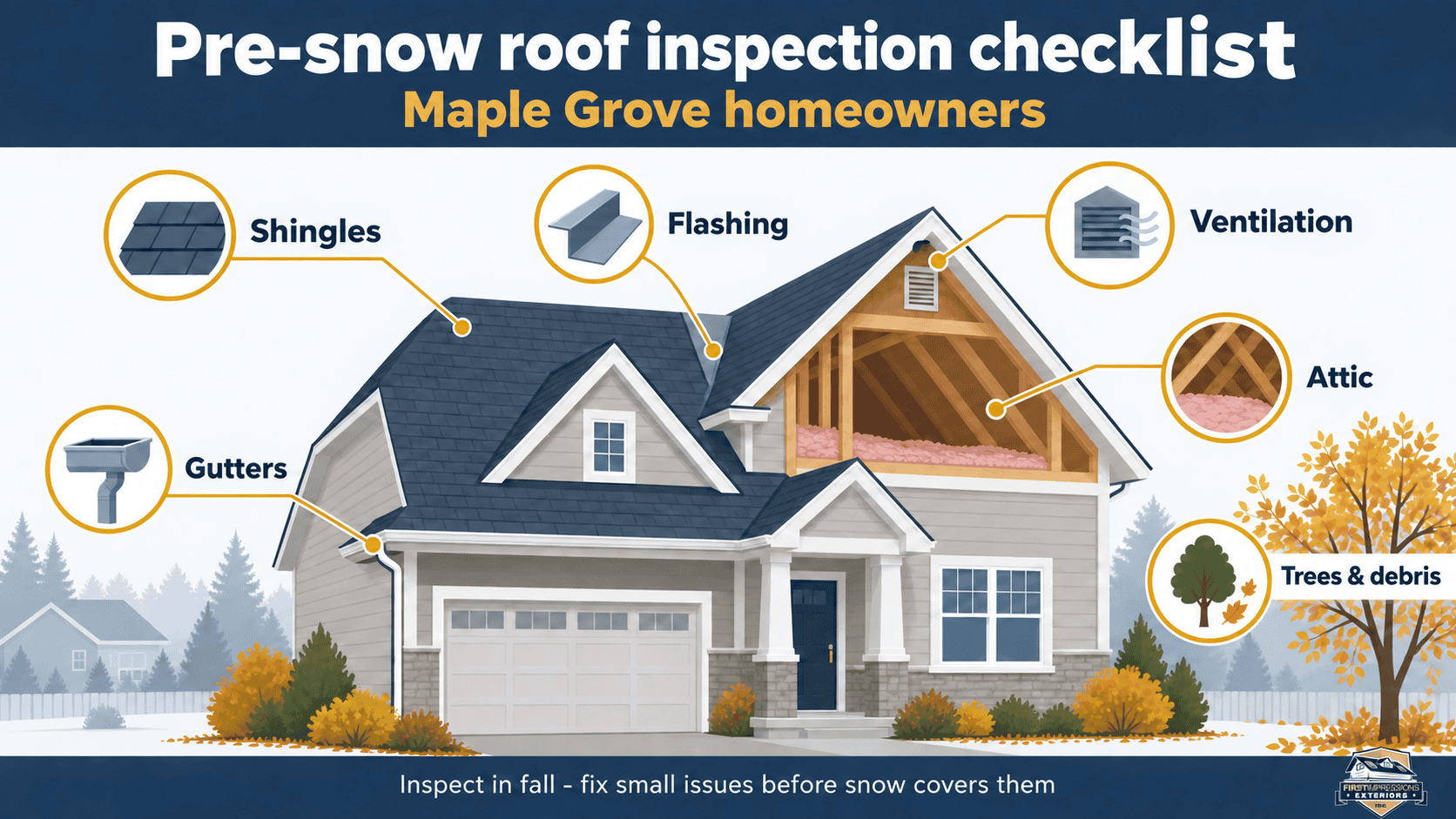
What a professional inspection should cover
Shingles and exposed fasteners
Missing, lifted, cracked, or creased shingles can admit wind-driven moisture. An inspector should also look for exposed or backed-out fasteners, damaged ridge-cap shingles, and areas where the shingle surface has lost more granules than the surrounding roof.
Flashing and roof transitions
Chimneys, plumbing vents, skylights, sidewalls, and roof-to-wall intersections depend on properly installed flashing. Sealant alone is not a lasting substitute for sound flashing. These transitions deserve close attention because they often reveal the first signs of a developing leak.
Valleys, eaves, gutters, and downspouts
Leaves and roof debris can slow drainage in valleys and gutters. Water that cannot move freely is more likely to refreeze near the eaves. Gutters should be secure, downspouts should discharge away from the foundation, and roof edges should be checked for staining, rot, or past overflow.
Attic conditions
A roof inspection is stronger when it includes the attic. Damp sheathing, frost marks, compressed insulation, blocked ventilation paths, or daylight around a penetration can point to problems that are not obvious outside. Heat leaking into the attic also contributes to uneven snowmelt and ice dams. For a deeper explanation, see FIE’s guide to preventing ice dams in Minnesota.
Signs Maple Grove homeowners should not wait on
- A ceiling stain that grows after rain or melting snow
- Shingles on the lawn after a windy day
- Visible sagging, soft decking, or a wavy roof plane
- Recurring icicles or ice buildup along one section of the eaves
- Water spilling behind gutters or staining fascia
- Loose flashing around a chimney, vent, or sidewall
If any of these signs are present, schedule an inspection before the next storm rather than waiting for a full replacement estimate. A targeted repair may still be possible when the issue is caught early.
What an inspection can and cannot tell you
A sound inspection should document the roof’s current condition, identify repairs that should happen before winter, and separate immediate concerns from items that can be monitored. It should not rely on scare tactics or assume that every older roof needs replacement.
If replacement is warranted, fall planning gives you time to compare materials, understand ventilation and ice-barrier details, and review local requirements. Maple Grove publishes roofing guidance for residential work, and a qualified contractor should handle permits and installation details correctly.
Prepare the rest of the roof system
Roof performance depends on more than shingles. Clean accessible gutters from the ground or hire someone equipped to work safely. Confirm that bathroom and kitchen exhaust fans vent outdoors rather than into the attic. Look for insulation gaps near attic bypasses, and make sure downspouts carry runoff away from the foundation.
Do not climb onto a wet, frosty, or snow-covered roof. The University of Minnesota Extension recommends addressing ice-dam causes through air sealing, insulation, and ventilation rather than relying on unsafe roof work or damaging shortcuts.
Schedule before the roof is covered
A clear, documented inspection before the first lasting snow gives Maple Grove homeowners a better basis for winter decisions. You will know what needs repair now, what can wait, and which areas deserve attention after the first major thaw.
First Impressions Exteriors provides roofing services in Maple Grove and throughout the Twin Cities. Schedule a roof inspection or estimate before winter weather limits visibility.
Quick answer: Should you inspect a Maple Grove roof before the first snow?
Yes. The best window is after most leaves fall and before snow stays on the roof. A pre-snow inspection can expose loose shingles, open flashing, clogged drainage, attic moisture, and ventilation problems while repairs are still practical.
Maple Grove roof inspection FAQ
Check it from the ground in spring and fall and after major hail or wind. A professional inspection is appropriate when the roof is older, you see warning signs, or no recent baseline exists.
Most residential inspections take about 45 to 90 minutes, depending on roof size, pitch, access, attic conditions, and the number of roof transitions.
Only to the extent conditions are safe and key surfaces remain visible. Snow can hide shingles and flashing, so a fall inspection usually provides a clearer assessment.
No inspection can guarantee that. It can identify heat-loss, ventilation, insulation, and drainage conditions associated with uneven snowmelt and ice buildup.
Expect photos, observed defects, inaccessible areas, repair priorities, and a clear distinction between maintenance, repair, and replacement.