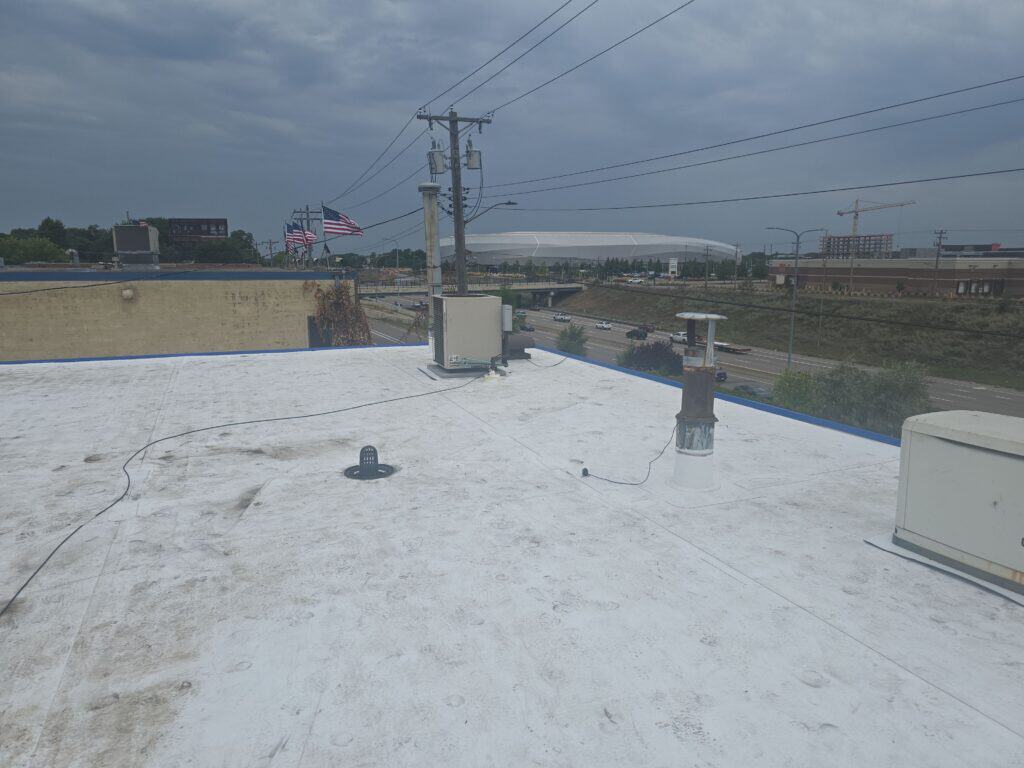
If you own or manage a commercial building with a flat or low-slope roof in the Twin Cities, this guide is for you. Which system fits your building depends on how the roof is used, what is on it, and how much life is left in what you have now. This guide walks through the options, what our climate does to a flat roof, and how to tell a solid proposal from a thin one.
The main flat roof systems, compared
Here is how the six common low-slope systems compare. First Impressions Exteriors installs TPO and EPDM low-slope systems; the rest are included so you can compare bids that spec them.
| System | What it is | Strengths | Watch-outs |
|---|---|---|---|
| TPO | White or light-colored single-ply membrane with heat-welded seams | Reflective surface cuts summer heat gain; welded seams; widely available | Quality varies by manufacturer; seams and flashings live or die on installer skill |
| EPDM | Black rubber single-ply membrane | Long track record; stays flexible in deep cold; simple repairs | Black surface absorbs heat; seams are taped or glued rather than welded |
| PVC | White single-ply membrane with heat-welded seams | Resists grease and chemicals, which is why restaurants use it | Usually specified where grease or chemical exposure rules out other membranes; some older formulations developed a reputation for cold-weather brittleness |
| Modified bitumen | Asphalt membrane with rubber or plastic modifiers, applied in layers | Tough, multi-layer surface; familiar to many crews | Torch application carries fire risk during installation |
| Built-up roofing (BUR) | Alternating layers of asphalt and reinforcing felts, usually topped with gravel | Proven over a century of use; gravel protects from UV and traffic | Heavy; messy to tear off; finding leaks under gravel is slow |
| Roof coatings | Liquid layer rolled or sprayed over an existing roof | Extends the life of a sound roof at a lower cost than replacement | Only works on a dry, sound roof; it is a restoration step, not a new roof |
One note on coatings: a coating is only as good as the roof under it. If the insulation is wet or the seams are failing, a coating seals the problem in. Any contractor proposing one should verify the roof is dry first, usually with a moisture survey.
What counts as a flat or low-slope roof
The National Roofing Contractors Association draws the line at 3:12: roofs with a slope of 3:12 or less are low-slope, and everything steeper is steep-slope. Low-slope roofs look flat from the ground, but they are not meant to be truly flat. The design intent is a slight pitch that moves water toward interior drains, scuppers, or gutters instead of letting it sit on the membrane.
That design difference matters. A steep shingle roof sheds water off overlapping pieces. A low-slope roof is a continuous waterproof skin, so seams, edges, and every hole cut through it for a vent or drain become critical details.
Why Minnesota is hard on flat roofs
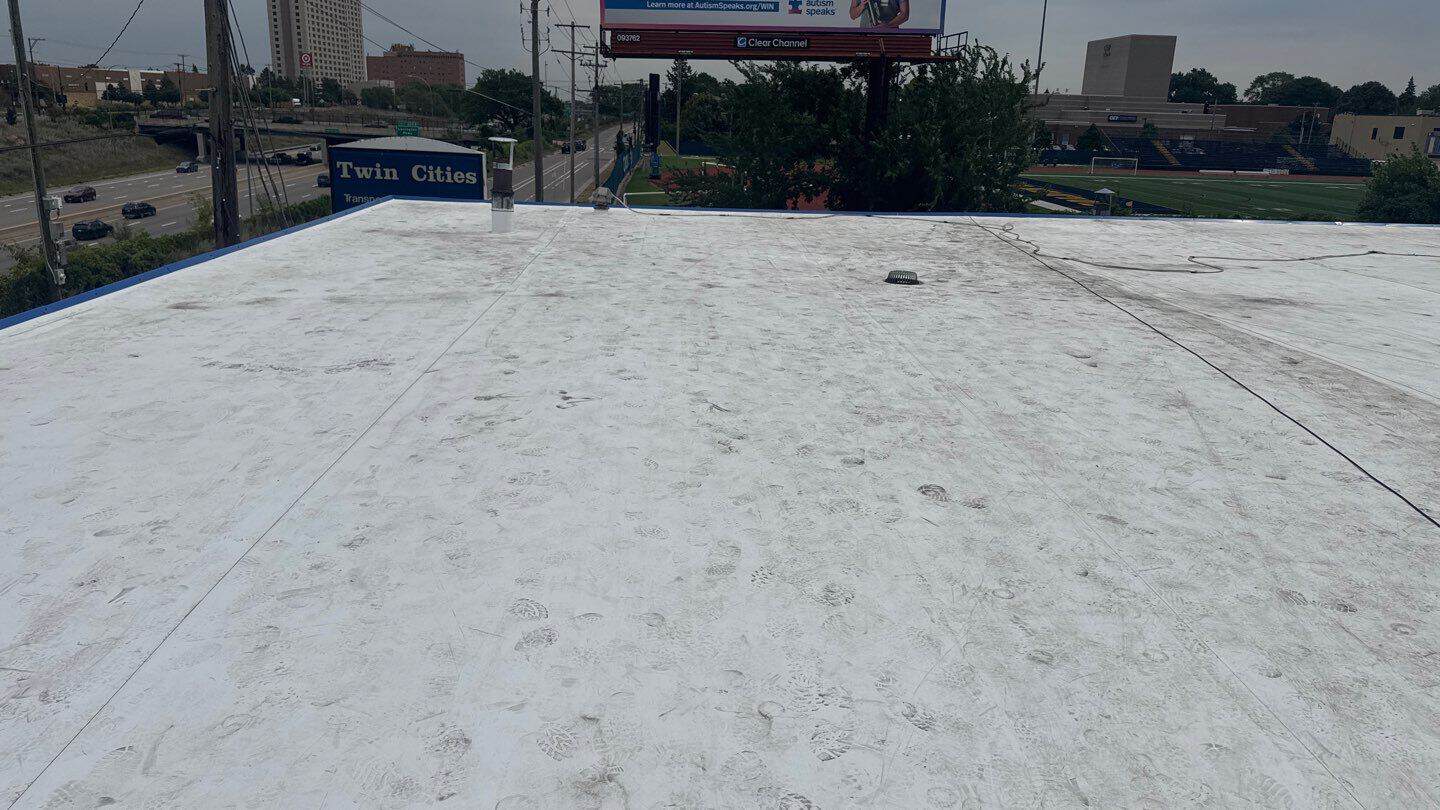
Between January cold snaps and July heat, a Minnesota flat roof expands and contracts constantly, and freeze-thaw weather multiplies that movement over and over through every spring and fall. A few specific forces do most of the damage:
- Freeze-thaw cycles. Water that gets into a small gap expands when it freezes and pries the gap wider. Twin Cities roofs go through this repeatedly from March into May, and again in the fall.
- Snow and ice at drains. Melting snow refreezes at cold drains and scuppers, which can pond water on the roof and force it under flashings.
- Summer heat and UV. A dark membrane surface can run well above the air temperature, which ages the material and stresses seams.
- Hail and wind. Hail bruises membranes and fractures older surfaces. Wind gets under loose edges and perimeter metal and peels them back.
- Foot traffic. HVAC techs, satellite installers, and snow removal crews work on your roof all year, and dropped tools, dragged panels, and shovels puncture membranes.
None of this makes flat roofing a bad choice here. Warehouses, retail buildings, offices, and apartment buildings across Minneapolis and St. Paul run low-slope roofs because they work. It does mean the system, the insulation design, and the maintenance plan all have to be chosen with this climate in mind.
What is under the membrane: the roof assembly
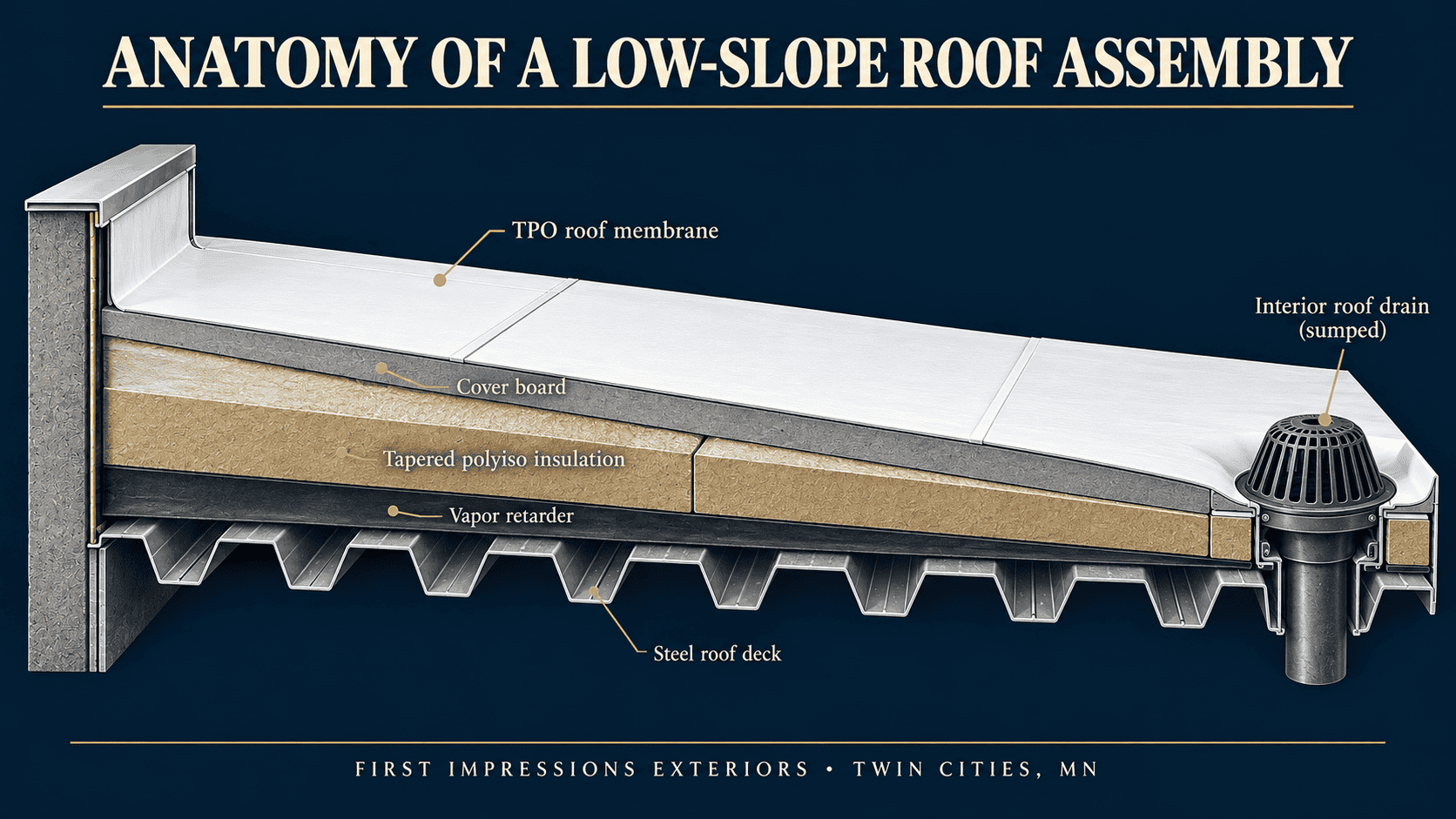
The membrane is only the top skin. A typical assembly, from the deck up, includes:
- Roof deck. Usually steel on commercial buildings, sometimes wood or concrete.
- Vapor retarder. Slows moist interior air from reaching cold parts of the assembly, where it would condense.
- Insulation. Usually rigid polyisocyanurate boards. On a flat roof this is often tapered insulation, cut so it creates the slope that moves water to the drains.
- Cover board. A thin, dense layer over the insulation that protects it from hail, foot traffic, and fire exposure, and gives the membrane a smooth surface.
- Membrane. The waterproof layer you see from above.
Insulation is also a code issue. The 2024 Minnesota Commercial Energy Code sets minimum roof insulation values for commercial buildings, and how those requirements apply to a given replacement or recover is project-specific. Expect your contractor to document code compliance as part of the proposal and to spell out the insulation scope. A bid that skips the insulation conversation is incomplete.
Where flat roofs usually leak
The NRCA calls the joint where the horizontal roof deck meets a vertical surface the most vulnerable part of any roof system, and a leak investigation concentrates on the details:
- Penetrations. Every vent pipe, conduit, and curb through the roof needs a flashing detail sealed to the membrane. These shrink, crack, and pull apart with age and movement.
- Seams. Welded or glued joints between membrane sheets. A failed seam can run for feet before water shows up inside.
- Perimeter and wall flashings. Where the roof meets a parapet wall or edge metal. Wind works these edges constantly.
- Drains and scuppers. Clogged or iced-up drainage ponds water on the roof. Ponding water adds weight and stresses the seams and flashings it covers.
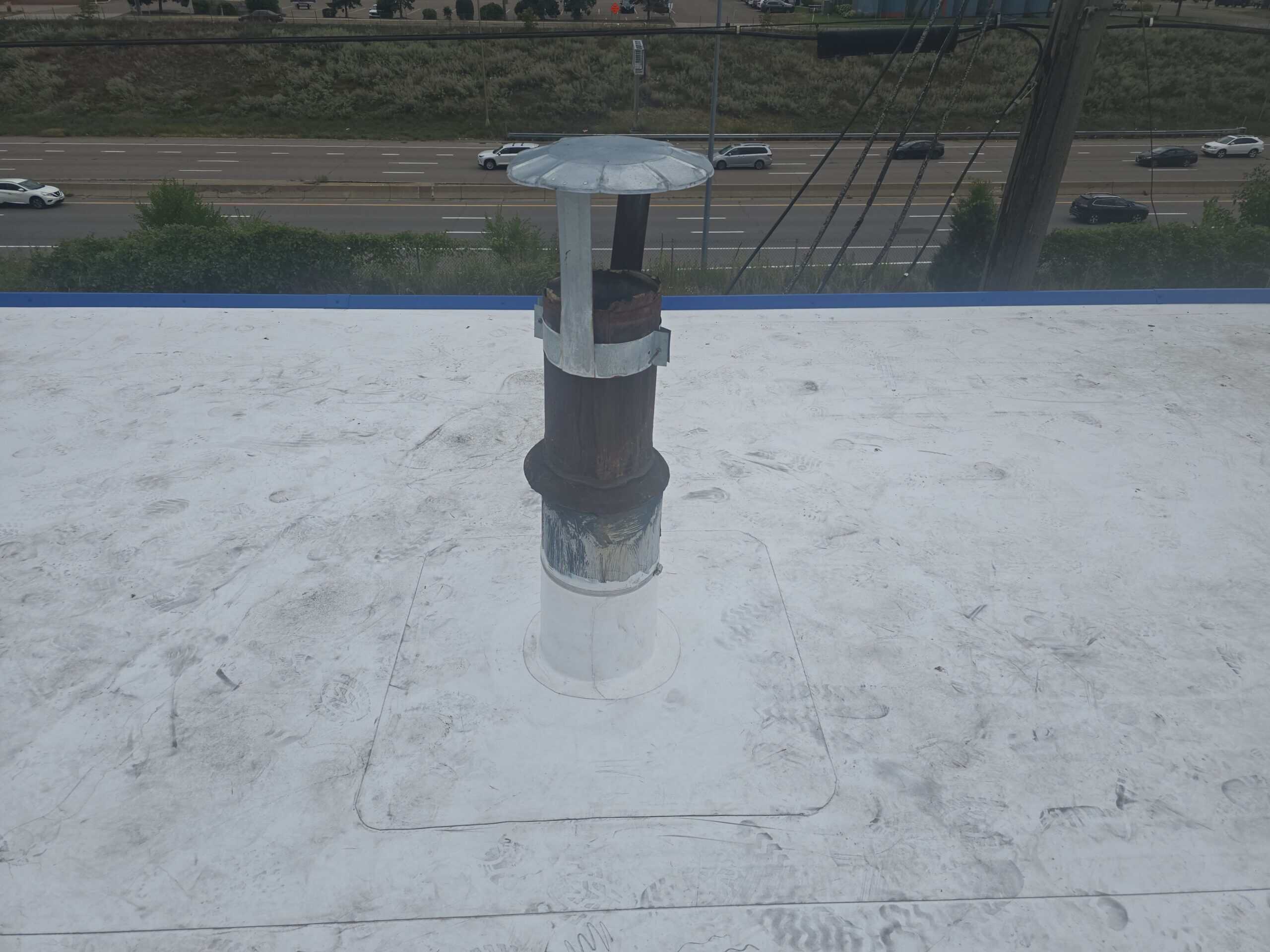
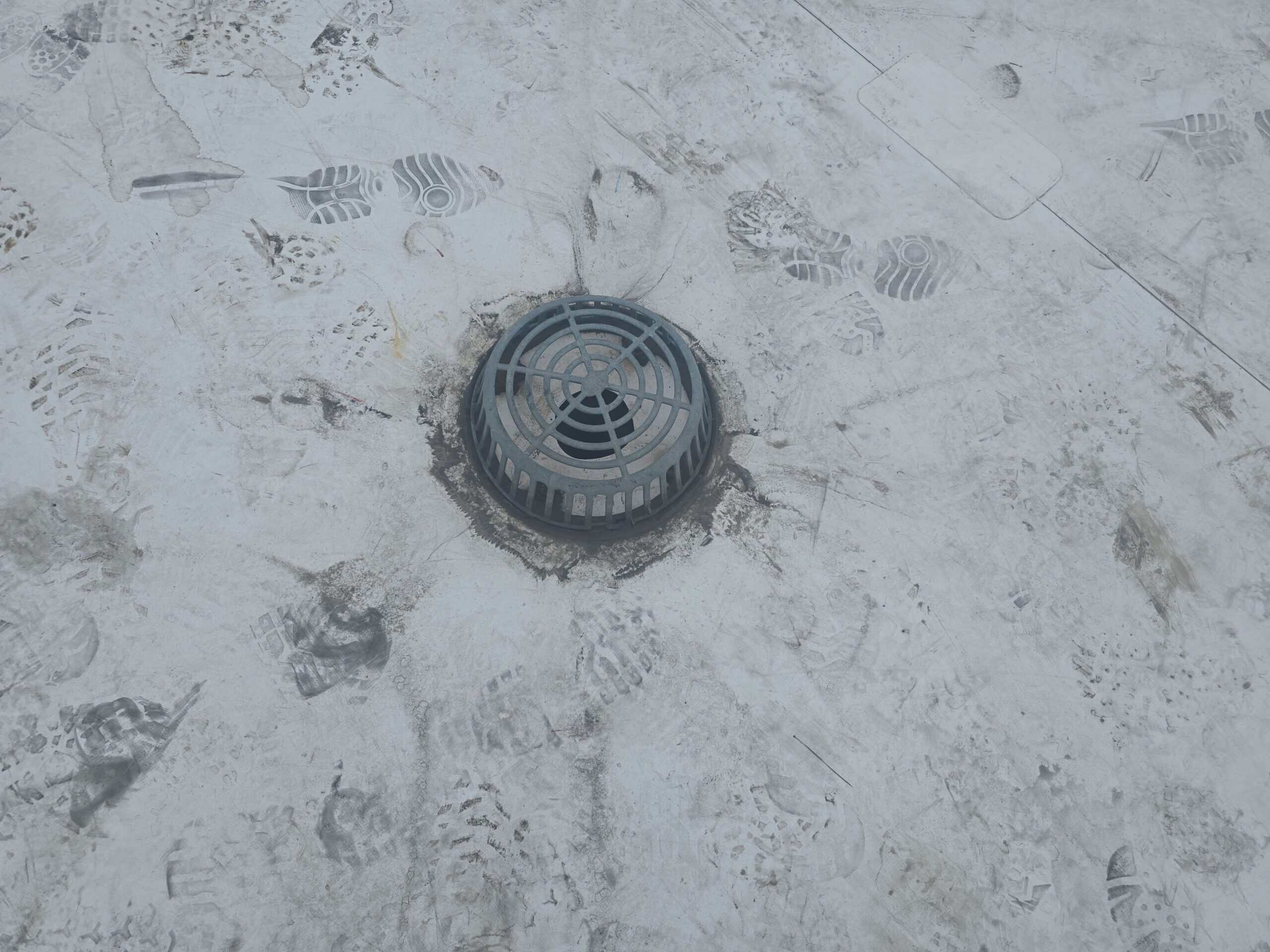
One caution: water stains inside the building show you where water came out, not where it got in. Water can travel along the deck and insulation for many feet. Finding the entry point takes experience, and sometimes moisture detection equipment.
Repair, restore, recover, or replace
When a flat roof starts causing trouble, you have four options. The right one depends on how much of the roof is wet, how old the system is, and what shape the deck is in.
| Option | What it means | When it fits | Limits |
|---|---|---|---|
| Repair | Fix the failed details: patches, flashing work, seam repairs | Damage is localized and the rest of the roof is sound | Repairs on an old, brittle membrane can be short-lived |
| Restore (coating) | Clean and coat the existing roof with a reflective liquid system | Roof is dry and structurally sound but the surface is aging | Will not fix wet insulation or failed seams; needs a dry roof to work |
| Recover | Install a new membrane system over the existing roof | One existing roof layer, dry insulation, sound deck | Building code sets whether a recover is allowed and how many coverings a roof may carry; wet areas must be cut out first |
| Replace | Tear off to the deck and install a full new assembly | Widespread moisture, multiple existing layers, or end of service life | Highest cost; the building gets a new assembly, and any warranty coverage follows the written terms of the specified system |
The decision should start with facts, not a sales preference. A moisture survey indicates where insulation is likely wet, and core samples confirm conditions at specific locations. How the findings weigh against a recover depends on the system, the condition of the membrane and deck, and what current code requires, so the decision should rest on measured conditions, not a rule of thumb.
Can you install a flat roof in a Minnesota winter?
Yes, with planning. Commercial roofing continues through Twin Cities winters every year, but the cold changes how the work gets done:
- Every adhesive, primer, tape, and self-adhering sheet carries a manufacturer minimum installation temperature. A contractor working in January should be able to tell you the limits for the specific products on your roof and how they plan to meet them.
- Heat-welded TPO seams can be welded in cold weather, but the welder settings and test welds matter more as temperatures drop.
- Snow and ice have to come off the roof before work starts, and the surface has to stay dry.
- Short daylight windows and frozen materials slow production, which can affect scheduling.
For an active leak in January, a good contractor can also install a temporary dry-in and come back for the full installation when conditions allow. Waiting until spring with an open roof is rarely the right call.
A maintenance plan that fits this climate
The National Roofing Contractors Association recommends inspecting a roof at least twice a year, in spring and fall, plus after severe weather. In Minnesota that maps well to the year: a spring inspection finds what freeze-thaw and ice did over the winter, and a fall inspection clears drains and confirms the roof is ready for snow.
| Season | What to do | What it prevents |
|---|---|---|
| Spring, after thaw | Full inspection of seams, flashings, and drains; document any winter damage | Small winter failures becoming saturated insulation by summer |
| Summer | Check the roof after hail or wind storms; keep equipment service traffic to walk pads | Storm damage and punctures going unnoticed |
| Fall, before snow | Clear drains, scuppers, and gutters; confirm seams and flashings are tight | Ice-blocked drainage and winter leaks |
| Winter | Watch for ice at drains and interior stains; keep snow removal crews away from membrane details | Shovel and equipment damage to the membrane |
A basic plan is simple: keep drains and scuppers clear, document every inspection with photos, keep a log of who goes on the roof, and fix small details before they grow. We put together a detailed walkthrough in our guide to TPO roof inspections and maintenance in Minnesota.
How to compare flat roofing proposals
Flat roofing bids are hard to compare because contractors scope them differently. Before you look at the bottom line, line up these items:
- Tear-off or recover. A recover price and a tear-off price are not the same job. Make sure you know which one each bid assumes.
- The named system. The manufacturer and product line should be in writing, not just “60 mil TPO.” Warranty coverage follows the named product.
- Insulation. The R-value and whether tapered insulation is included to fix ponding. This is often where a low bid cuts cost.
- Warranties. There are two: the manufacturer warranty and the contractor workmanship warranty. Ask for both lengths in writing, plus what the wind coverage is.
- Who services it. A leak call two winters from now will go to the installer, not the manufacturer. Ask how service calls are handled.
Common questions about flat roofing in Minnesota
There is no single best system for every building. EPDM has a long track record and stays flexible in deep cold; TPO offers a reflective surface and heat-welded seams. The right answer depends on the building’s use, roof traffic, and budget.
There is no fixed number that applies to every roof. Service life depends on installation quality, drainage, foot traffic, storm exposure, and whether small problems get repaired early. Two roofs installed the same year can be in very different condition today. Manufacturer system warranties vary by system and product, but a warranty term is a coverage period, not a prediction for any one roof. An inspection of the membrane, the seams, and the moisture condition below is what gives a real answer for your building.
Cost depends on the roof size, whether the old roof is torn off, the insulation required, the system chosen, and how many penetrations and edges need detail work. Two roofs of the same square footage can price very differently. The reliable way to get a number is an on-site inspection and a written, itemized proposal.
Yes. Crews install flat roofs through Minnesota winters, but cold weather limits some adhesives and self-adhering products, and snow removal adds time. A qualified contractor will tell you which products work at the forecast temperatures and how they will keep the building dry during the work.
Some water on a flat roof after rain is normal while drainage does its job. The NRCA defines ponding as water that remains more than 48 hours after precipitation, and it is worth documenting: where it sits and how long it stays. Ponding adds weight and raises the stakes on the seams and flashings it covers. Have a professional assess the drainage rather than assuming the roof is failing.
Start with the facts: the age and condition of the membrane, whether the deck is sound, and what is happening in the insulation. A moisture survey indicates where insulation is likely wet, and core samples confirm it at specific locations; those findings take the guesswork out of the decision. Localized damage on an otherwise healthy roof is a repair. Widespread moisture or a roof near the end of its service life points toward replacement.
Yes. Industry guidance from the NRCA is inspections at least twice a year, in spring and fall, plus after severe storms. Keeping drains clear, documenting conditions, and repairing small details early are what keep small problems from shortening a roof’s service life.
Get a straight answer on your flat roof
First Impressions Exteriors installs and services TPO and EPDM low-slope roofing on commercial buildings across the Twin Cities, greater Minnesota, and western Wisconsin. FIE is a Minnesota-licensed general contractor (BC631617). If you want a professional read on your roof, start with our commercial roofing services or schedule an estimate. You can also call us at 763-762-8934.