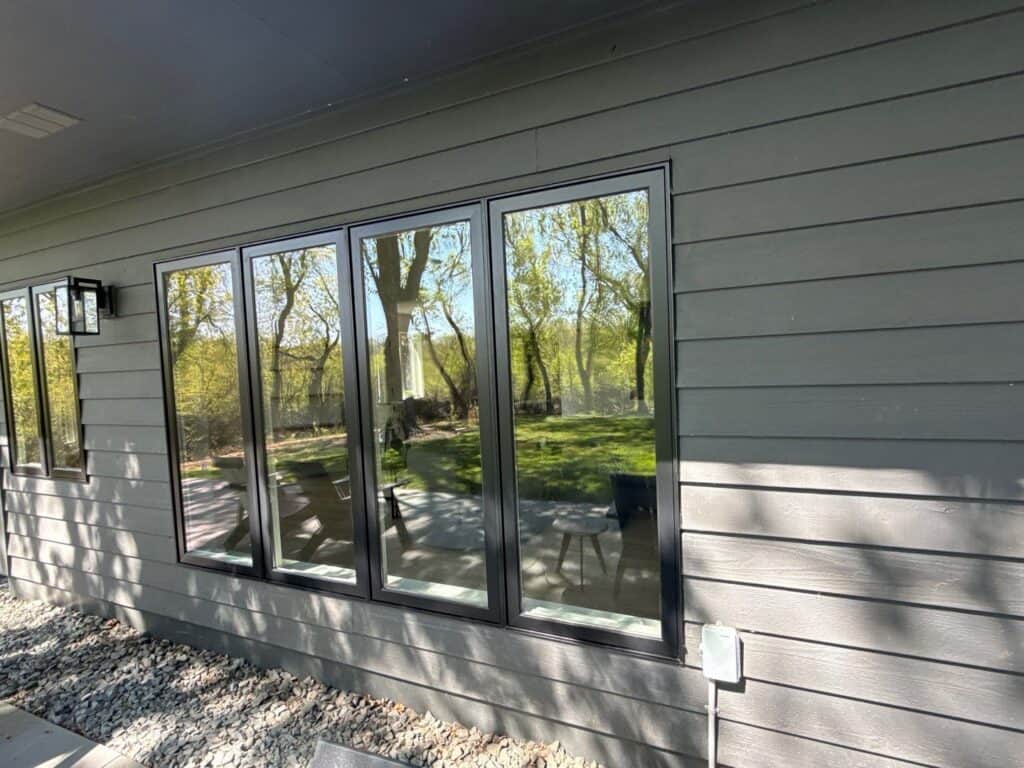
Yes, windows can be replaced in a Minnesota winter. There is no industry-wide temperature cutoff that ends the season. What decides a winter install day is the weather that day, the temperature ratings of the materials being used, and a crew that works one opening at a time. Here is how cold-weather window installation actually works, and how to tell whether waiting for spring makes sense for your home.
Can you replace windows in the winter?
Yes, and it happens across the Twin Cities every winter. Professional installers work year-round, and the window itself does not care what month it is. The conditions that matter are at the opening: dry surfaces, materials within their rated application range, and a process that keeps the rest of the house closed up while each window goes in. Some days do get rescheduled, usually because of precipitation, frost on the surfaces being sealed, or a product whose instructions call for warmer temperatures.
How a cold-weather window installation works
A winter install looks different from a summer one in a few deliberate ways:
- One opening at a time. The old window comes out only when the new one is staged and ready, so no opening sits exposed longer than that window takes to set.
- Rooms closed off. Work areas can be closed doors or temporary plastic barriers, so the rest of the house holds its heat.
- Materials kept warm. Sealants, foams and tapes stay in a heated vehicle or indoors until they are needed, because cold product does not flow, expand or adhere the way its rating assumes.
- Surfaces checked before sealing. Every surface that takes sealant or tape gets checked for moisture and frost first.
Why materials matter more than the calendar
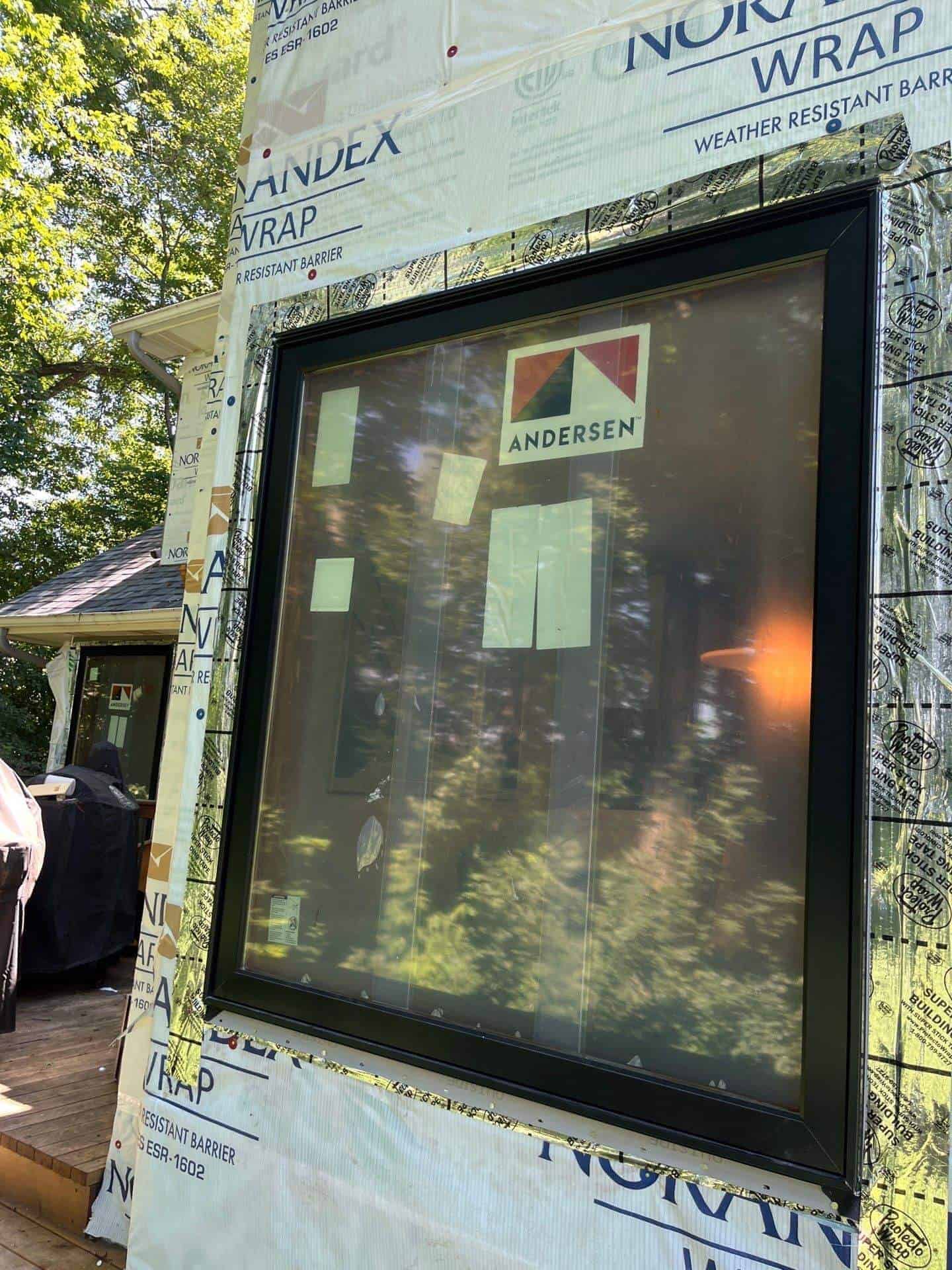
Every sealant, insulating foam and flashing tape carries its own application temperature rating and surface requirements from its manufacturer. Those ratings, not a rule of thumb about the calendar, decide what can be installed on a given day. Examples from current product literature:
| Product | Cold-weather rating | Source |
|---|---|---|
| Andersen Window Installation Sealant (MS polymer) | Apply between 10°F and 110°F | Andersen sealant technical data sheet |
| DOWSIL 795 Silicone Building Sealant | Apply as low as -20°F | Dow cold-weather sealant guide |
| OSI QUAD Window & Door System foam | Apply between 14°F and 86°F; store the can above 41°F for 12 hours first | OSI QUAD foam technical data sheet |
| Flashing tape | Rated application temperature is set product by product (AAMA 711); check the tape’s own data sheet | AAMA 711 certification standard |
These are examples from published product literature as of October 2026, not universal numbers. The instructions for the specific products on your project govern, and your contractor should be able to tell you which products they use and what those products allow.
A few things stand out from the data. Water-based products like latex caulk can freeze before they cure, which is where the old “never below freezing” rule of thumb comes from. Moisture-curing products cure more slowly in winter because cold air holds less humidity; the seal still reaches full strength, it just takes longer. And the insulating foam around a window has to be the low-expansion type made for windows and doors, because high-pressure foam can bow a frame and keep the sash from operating, in any season.

Full-frame vs. insert replacement in cold weather
Full-frame replacement removes everything down to the rough opening. It is the more weather-sensitive project because flashing tapes and sealants are exposed to conditions at every step. It is also the right call when the existing frame is damaged, out of square or poorly insulated, and winter is often when those problems are most obvious.
Insert (pocket) replacement sets a new unit inside the existing frame, so more of the work happens inside the weather line. On older homes, the details that matter are sealing the joints of the original frame, especially at the sill, and insulating the old weight pockets so the new window does not sit inside a cold cavity. For many homes, an insert replacement is the easier winter project.
Either method can be installed in winter when products and conditions line up. The right choice depends on the condition of the existing frame, not the season.
What winter does to a failing window
A window that is borderline in October is a real problem in January. Drafts that felt minor become cold rooms. Weak seals and failed insulated glass let heat out around the clock, and the furnace runs longer to keep up. Wood frames that took on water in the fall can freeze, which opens joints and finishes faster than a year of ordinary weathering. If a window is already hard to lock, fogged between the panes or soft at the sill, winter will not wait politely for a spring appointment.
Does a winter install cost less?
Winter is the slow season for most exterior contractors, and that usually means more open dates and faster scheduling, not a different product or a shortcut version of the job. What a project costs depends on the windows, the opening and the method, not the month. Be cautious with any bid that leans on a seasonal discount instead of explaining the work. The better winter advantage is timing: a failing window replaced in December stops costing comfort in December, not in May.
Signs a window should not wait until spring
- Drafts you can feel standing next to the closed window.
- Fog or moisture trapped between the panes, which points to a failed insulated-glass seal.
- Ice forming on the inside of the frame or sash.
- Sills or trim that feel soft, spongy or discolored.
- Sashes that will not lock, which is a security issue as much as an energy one.
- Heating equipment running noticeably longer than past winters in the same weather.
Any one of these is worth an inspection. None of them improve on their own over a Minnesota winter.
When a winter install day gets rescheduled
Postponing is sometimes the right call. The usual reasons:
- Active snow, rain or sleet. Sealants and tapes should not go on during precipitation.
- Frost or ice on bonding surfaces. Adhesion fails on frost even when the air temperature is within the product’s range, and frost can form invisibly near freezing.
- A product outside its rated range. If one step on the job calls for a product that cannot be applied that day and no cold-rated alternative fits, that step waits.
- A forecast that will not let materials cure. Some products need a window of time above a set temperature to cure properly.
A crew that reschedules for these reasons is protecting the installation, not making an excuse. The seal around a window has to last for decades, and it only gets one chance to bond.
Why installation quality shows up first in the cold
A window with a marginal seal can hide it in September. It cannot hide it at -10°F. The coldest nights are when gaps in insulation around the frame, skipped flashing and rushed shimming announce themselves as drafts, condensation and frost at the trim. That is why the process questions above matter more than the brand on the glass. A mid-range window installed carefully will outperform a premium window installed fast, and winter is when the difference gets measured.
How to prepare your home for a winter installation
- Clear snow and ice away from the windows being replaced, inside access paths included.
- Move furniture and take down window treatments before the crew arrives.
- Pick a room that can stay closed off as the house’s warm zone.
- Keep pets in a separate room; doors will open and close all day.
- Ask where materials will be staged so vehicles and storage stay warm.
Questions to ask a window contractor about winter work
- Which sealants, foams and flashing tapes do you use, and what are their temperature ratings?
- How do you keep the house warm during the install?
- What conditions make you reschedule a day?
- Do you install both full-frame and insert replacements in winter?
- On an insert job, how do you handle the old frame joints and weight pockets?
The answers should be specific. “We watch the forecast” is a scheduling note, not a materials plan.
Planning new windows this winter? First Impressions Exteriors installs full-frame and insert replacement windows across the Twin Cities, including Andersen, Pella, Hayfield and Marvin. Schedule an estimate or call 763-762-8934.
Winter window replacement FAQs
Is it too cold to replace windows in a Minnesota winter?
Usually not. There is no universal cutoff. Each sealant, foam and flashing tape has its own rated application range, and some are rated well below zero. Installs pause when conditions fall outside the instructions for the products being used, or when surfaces are wet, frozen or frosty.
Will my house get cold during a winter window replacement?
Some heat loss is unavoidable, but installers limit it by replacing one window at a time and closing off the work area. Each opening stays exposed for a limited part of the job, not all day.
Does window caulk and sealant work in cold weather?
It depends on the product. Water-based caulks can freeze before they cure, while many silicone and MS polymer sealants are rated for application below freezing, some as low as -20°F. Cold slows curing, and every product still needs a clean, dry, frost-free surface to bond.
Should I wait until spring to replace drafty windows?
If a window is failing, waiting means months of drafts, higher heating use and possible moisture damage to the frame and wall. When materials and conditions line up, there is no technical reason to wait for spring.
Does winter window installation take longer than summer?
It can. Warming materials, clearing frost and working one opening at a time adds steps, and short daylight compresses the workday. Many replacements still finish in a day, but weather can stretch the schedule.
Can insert replacement windows be installed in winter?
Yes. Insert replacement happens mostly inside the existing frame, so it carries less weather exposure than full-frame work. The old frame’s joints still need sealing and the weight pockets insulating for the new window to perform.
Already fighting foggy or wet windows this fall? Our guide to window condensation and winter humidity explains what the moisture is telling you. For a look at the brands we install, see our window replacement page.
Research behind this guide
Product literature and installation instructions checked for this guide: Andersen’s installation sealant technical data and 400 Series installation guides, Pella’s nail fin installation instructions, Marvin’s rough opening preparation and flashing instructions, Dow’s and GE Silicones’ cold-weather sealant guidelines, Tremco’s cold-temperature sealant recommendations, OSI’s QUAD foam technical data, Ply Gem’s cold-weather installation guidance, ProVia and Viwinco installation instructions, and Pressure Sensitive Tape Council research on AAMA 711 low-temperature flashing tape testing.
Reviewed for this guide: October 2026. First Impressions Exteriors · Minnesota contractor license BC631617.